Floodwater Perch Fishing – Land of The Giants!

This article was co-written by Bradley Hunt and Tommaso Martinelli.
Well… how do we begin to explain this…? Some days in fishing sound too good to be true, the kind of stories you’d normally dismiss as exaggeration without hard proof. When it happens two days in a row, and the second somehow outdoes the first, it starts to feel like the stuff of fishing mythology.
But days like these don’t happen by accident. It all starts with knowing where to look.
Perch Fishing – When the Rivers Flood
After two solid weeks of rain, the rivers were heavily flooded. Most anglers see conditions like that and stay at home, but for us, it’s exactly the moment we wait for to tackle the big river. Very few anglers are willing to brave the weather and even fewer truly understand what to look for when the water rises.
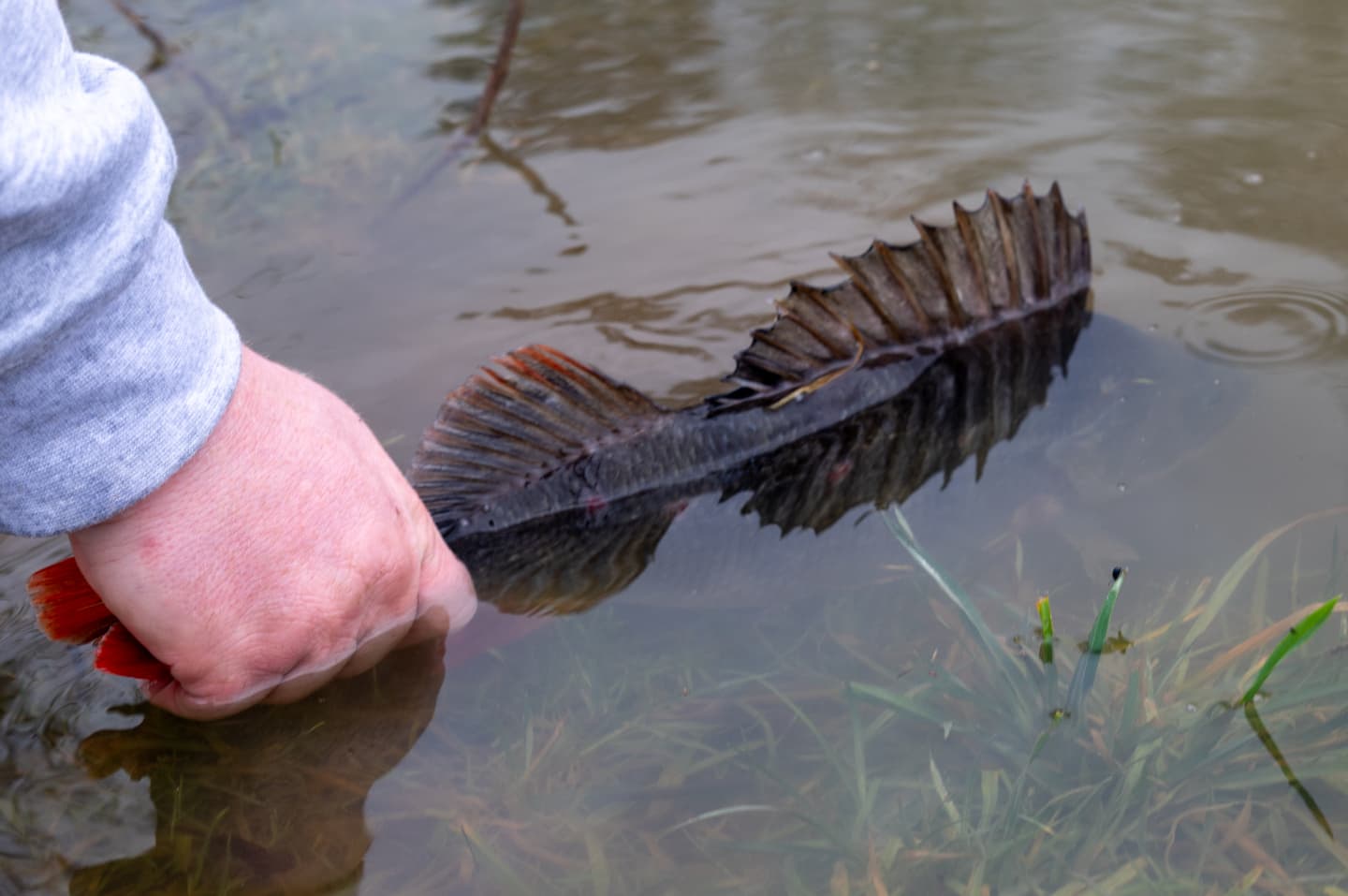
Big rivers plus big floods equals big slacks and that’s where your attention should be. Baitfish instinctively search for slack water to escape the main force of the flood. Predators, being the opportunistic creatures they are, follow them in for an easy meal.
Finding those areas, however, isn’t something you can do from the comfort of your sofa. Google Maps won’t help you here, it’s a tall wellies, long walk along flooded banks kind of job. You keep moving until you spot that magical place where the water folds back on itself, forming a calm, almost still pocket surrounded by raging current.
Many of these slacks don’t even exist under normal river levels. Sometimes what becomes a sanctuary during a flood is usually just part of a field. That’s where the baitfish hide, and where the perch of a lifetime might be waiting.
Not Just Any Slack
Of course, just because there’s a slack doesn’t mean it’s the slack. Our first stop of the day was a reliable area that would usually produce a fish or two, but it seemed completely devoid of life. We very nearly called it a day that Saturday.
Then we noticed a newly formed pocket of slack water in an area we wouldn’t normally fish. After a brief glance at each other, the decision was simple:
“May as well give it a chuck while we’re here.”
The high water had created something entirely new. In summer, you’d be standing in that very spot casting into steady, flowing water, but now it had transformed into prime flood-time habitat.
It didn’t take long before we felt the first hit, the moment that marked the beginning of a weekend neither of us will ever forget.
Keeping It Simple, Fishing It Right
We were both fishing the same setup, an upcoming Ned bait from Kuore, Texas rigged with 3.5g on a size 2 Gamakatsu G-Code Worm Offset EWG.
When you’re faced with a river that looks fast enough to make Aquaman think twice, the natural reaction is to overweight your rig. But the key is remembering that the slack itself often has very little flow and may not even be particularly deep.
Use just enough weight to get the lure where it needs to be. Any more than that and you lose the finesse, natural presentation that makes all the difference. Once it lands, let it settle. Take in the view. Resist the urge to immediately retrieve.
These fish are cold and lethargic, looking for a low-risk, high-reward meal. If your lure is halfway back before they’ve even noticed it, your chance is already gone.
The Importance of the Right Rod
The fish were holding at range, overhanging trees and vegetation meant we needed distance to get a clean cast. Short rods simply weren’t up to the task, something over seven feet was essential.
A moderate-fast or fast action rod is ideal for Texas rigs. Extra-fast rods risk bumping fish off, while moderate actions, better suited to hardbaits, don’t provide the backbone needed for solid hooksets.
Manufacturer ratings can be misleading, so it always pays to get a rod in your hands before trusting the label. If the primary bend sits roughly a quarter of the way down from the tip, you’re in the right territory. Too close to the tip or too far toward the handle, and it’s not the tool for the job.
Commit to the Hookset When Perch Fishing
Anyone who has fished with us knows not to stand too close. When we set the hook, we SET THE HOOK. At distance especially, hesitation costs fish. Give ’em the beans, hooksets are free and that fish of a lifetime won’t wait around for a second chance.
Saturday Delivers Huge Rewards!
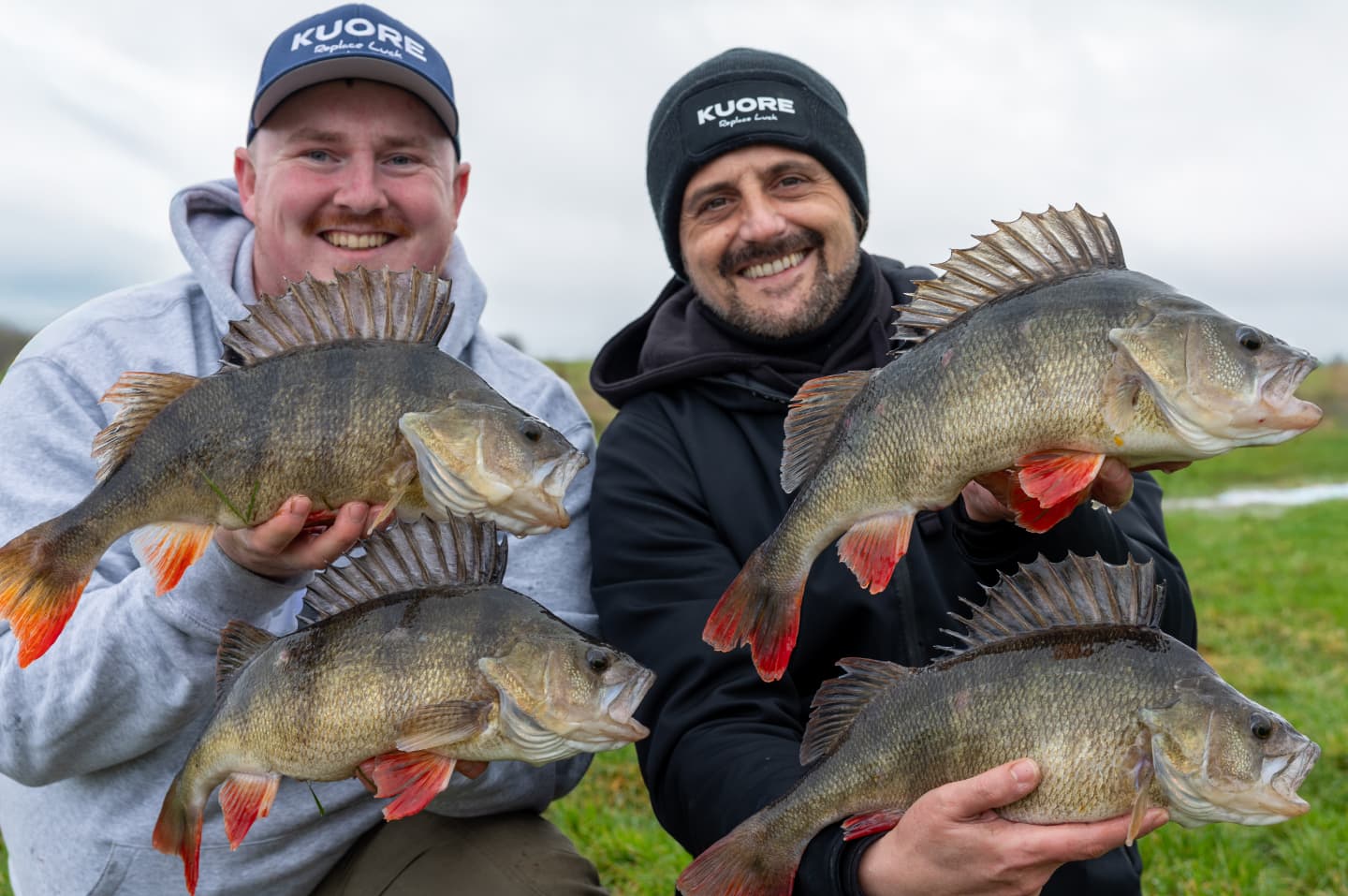
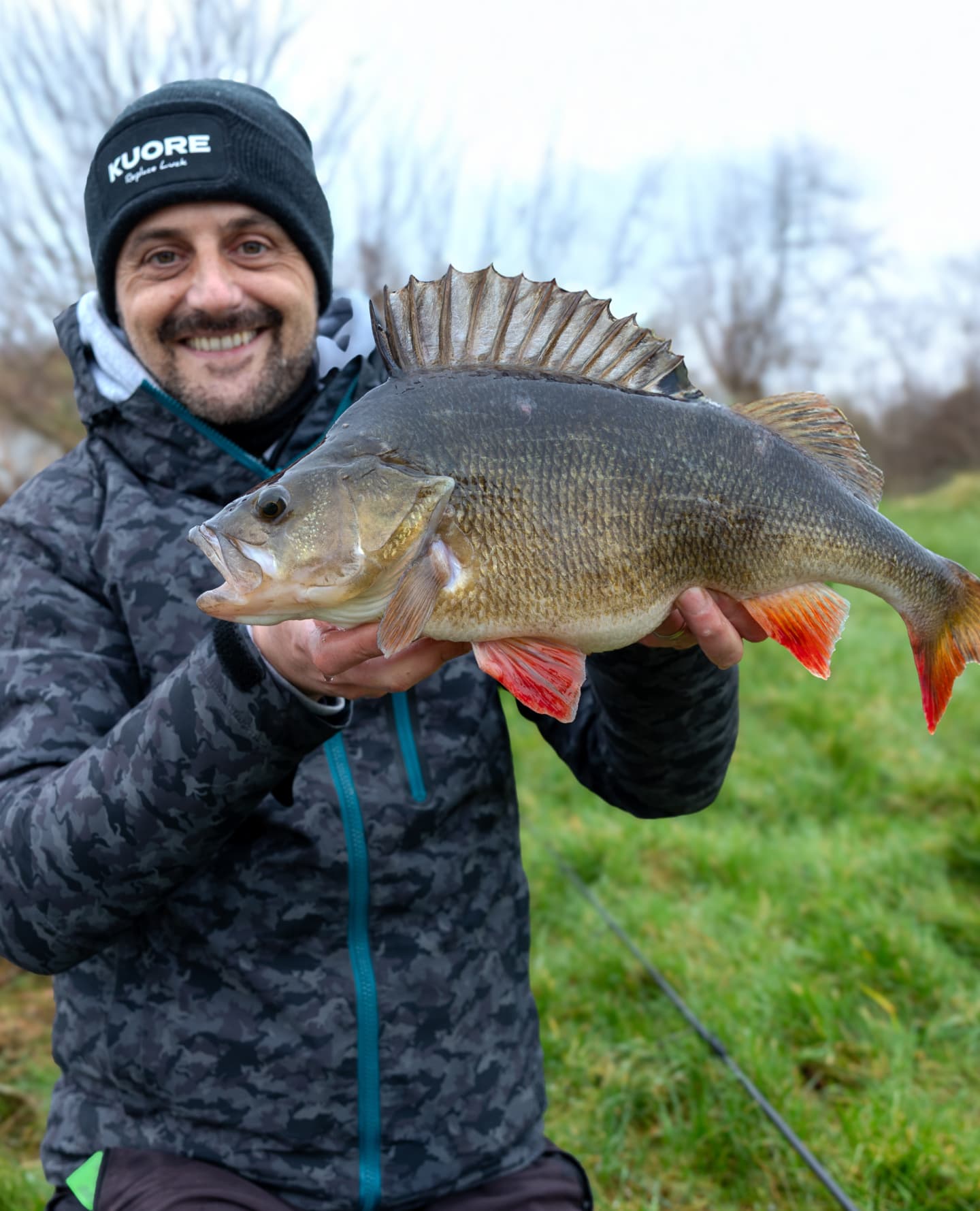
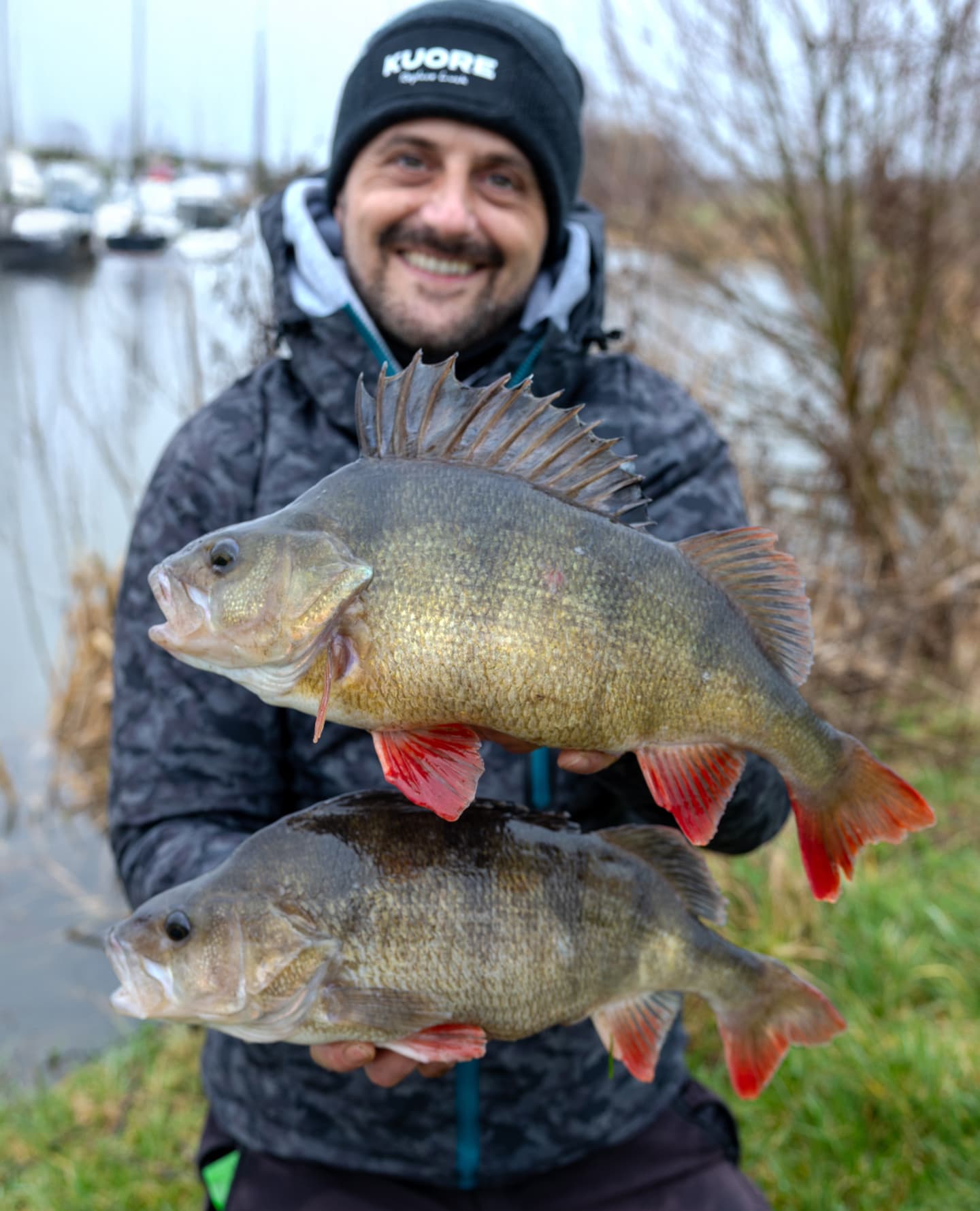
By the end of Saturday, the results spoke for themselves, four fish over 4lb and three over 3lb.
Tommaso:
- 4lb 8oz
- 4lb 1oz
- 3lb 13oz
- 3lb 2oz
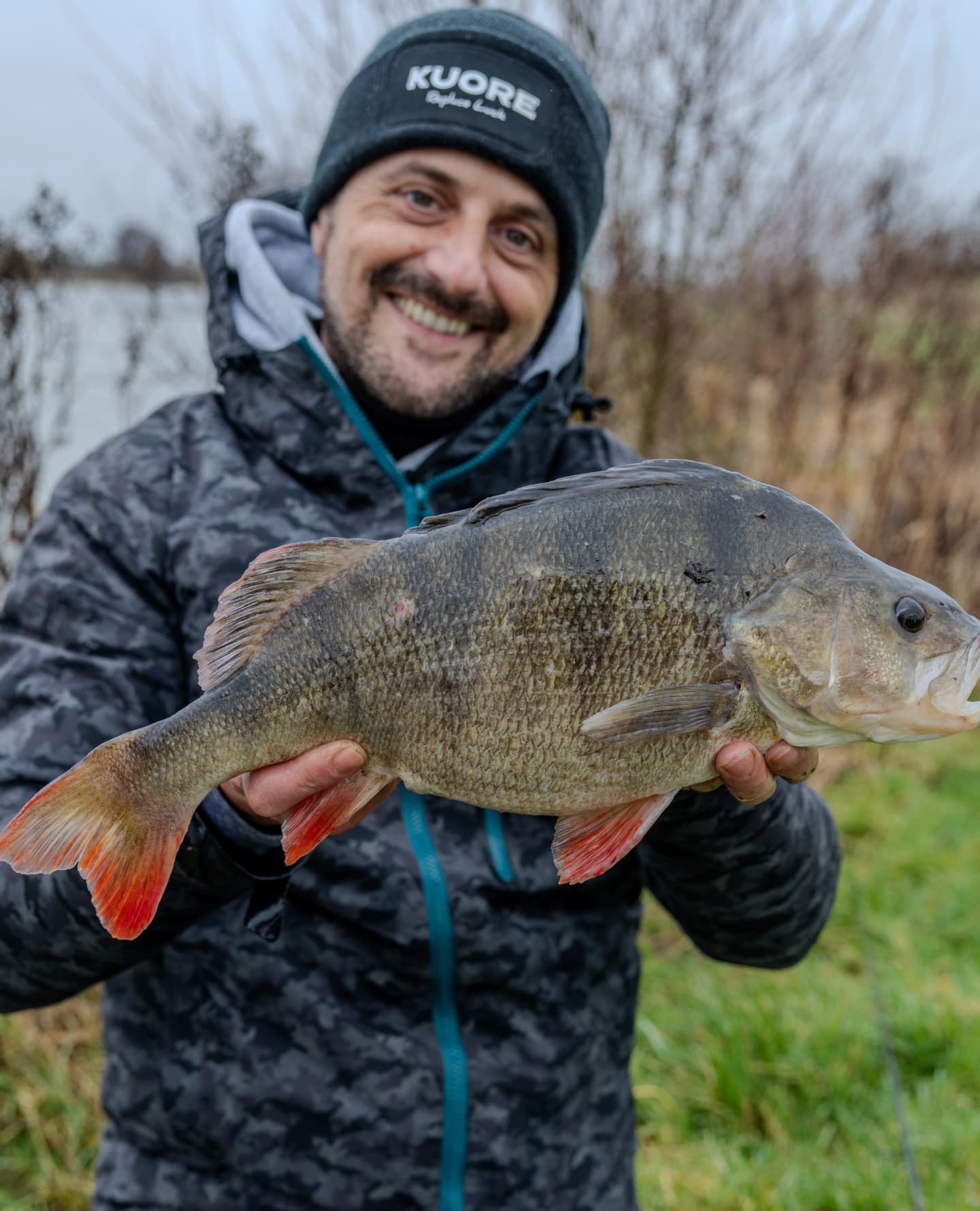
Bradley:
- 4lb 2oz
- 4lb 0oz
- 3lb 15oz
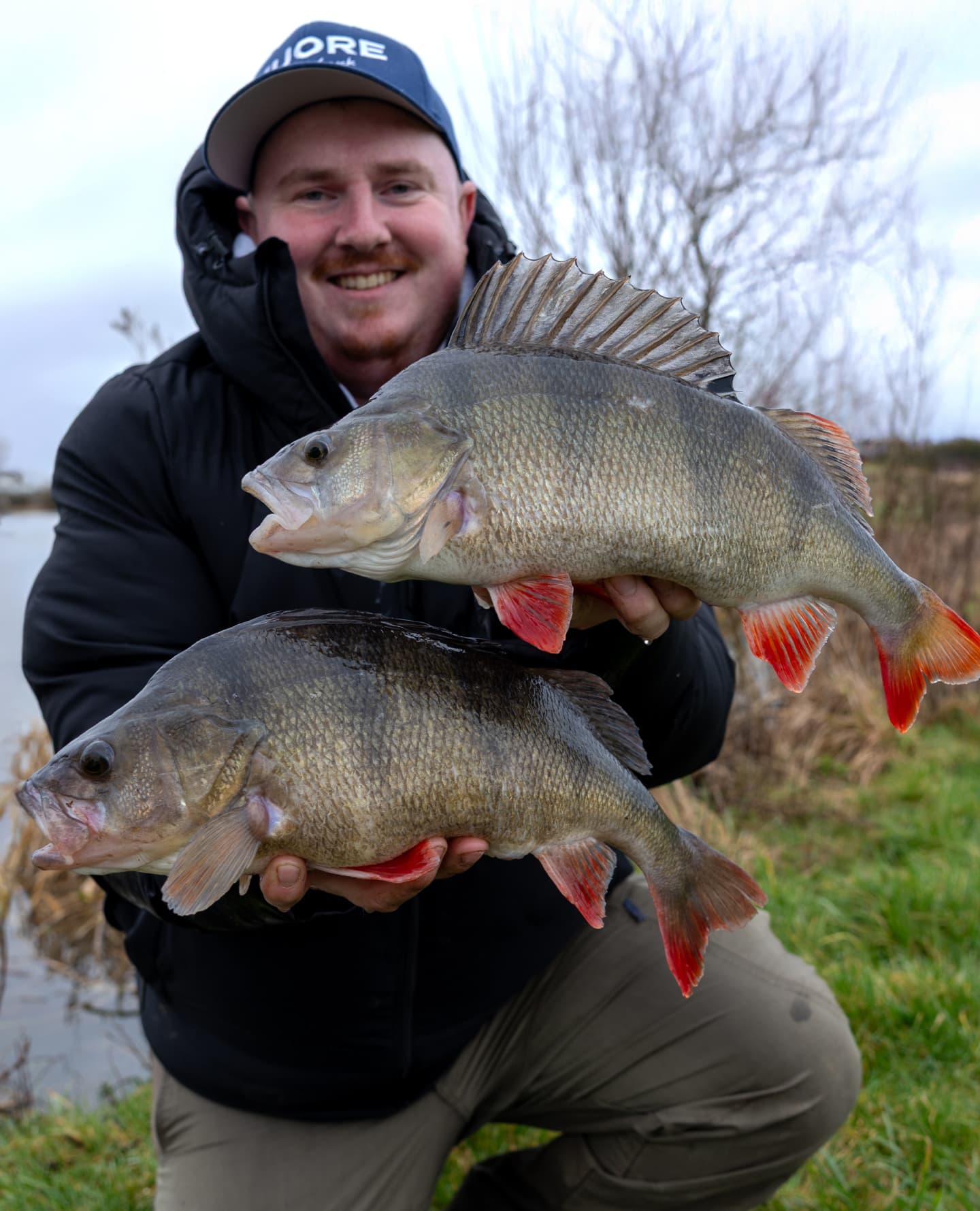
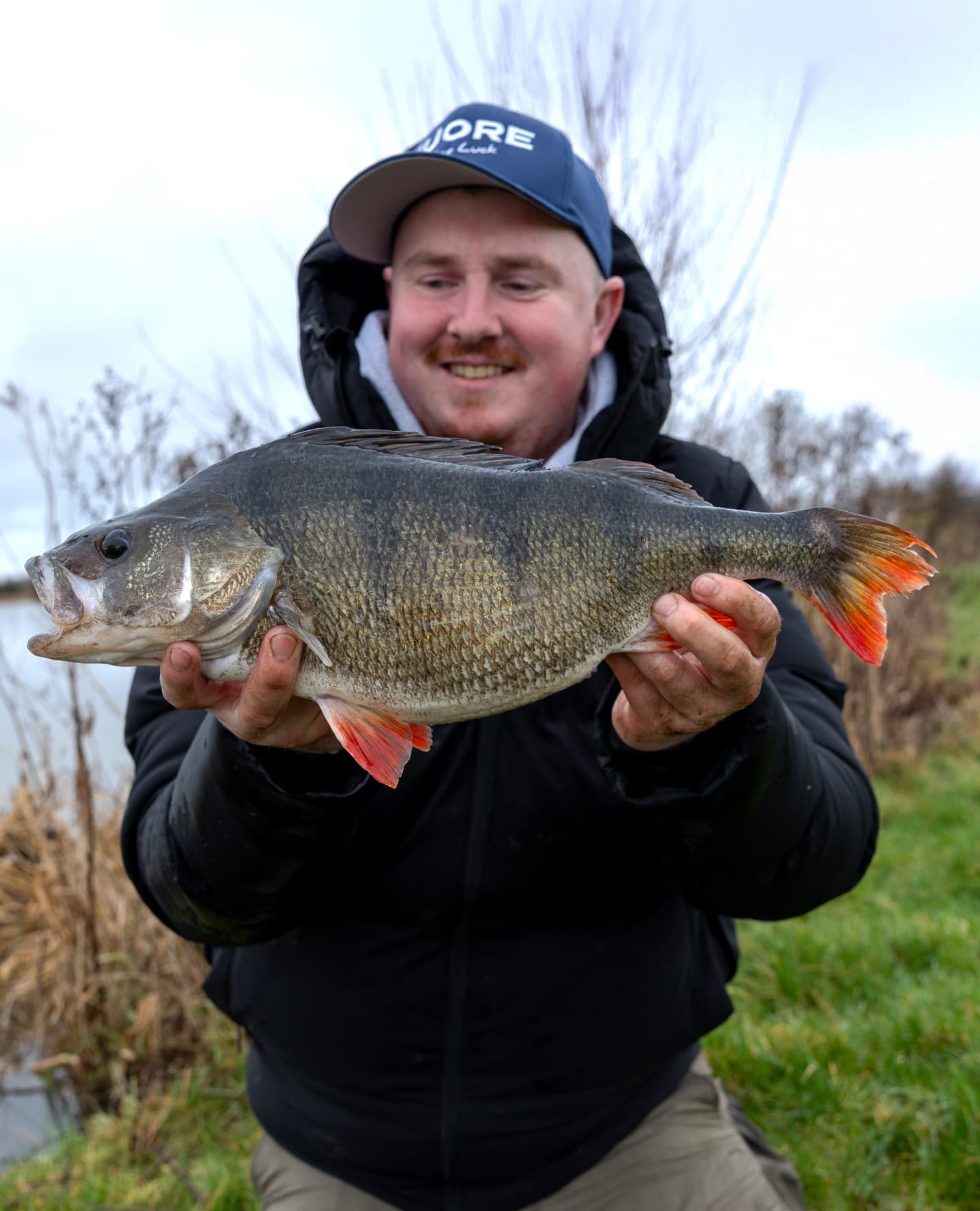
Total, 27lb 9oz for seven perch.
We briefly considered resting the spot for a week or two, but after a very short discussion and a not-so-subtle “you’d be insane not to go back” from Adam Seeley, the decision made itself.
We had to return on Sunday to see if lightning could strike twice.
Dialling It In on Sunday
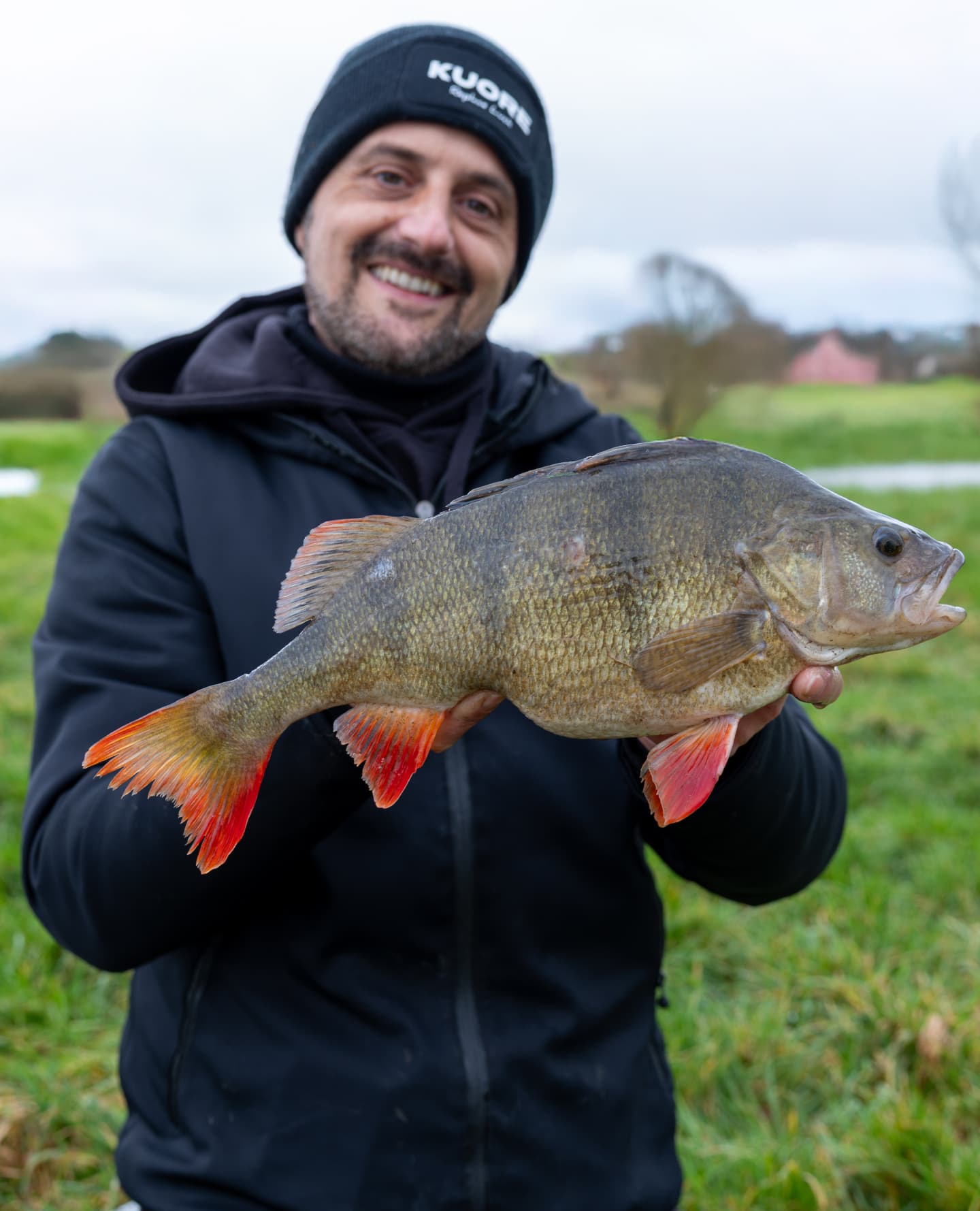
The rigs remained largely unchanged, though we did switch colours after noticing the fish were clearly keyed into a darker profile. Before long, that unmistakable thump signalled another proper perch. The hookset followed, then those slow, heavy head shakes that instantly tell you you’re connected to something special.
Tommaso:
- 4lb 6oz
- 3lb 14oz
- 3lb 2oz
- 2lb 5oz
- Bonus chub, unweighed
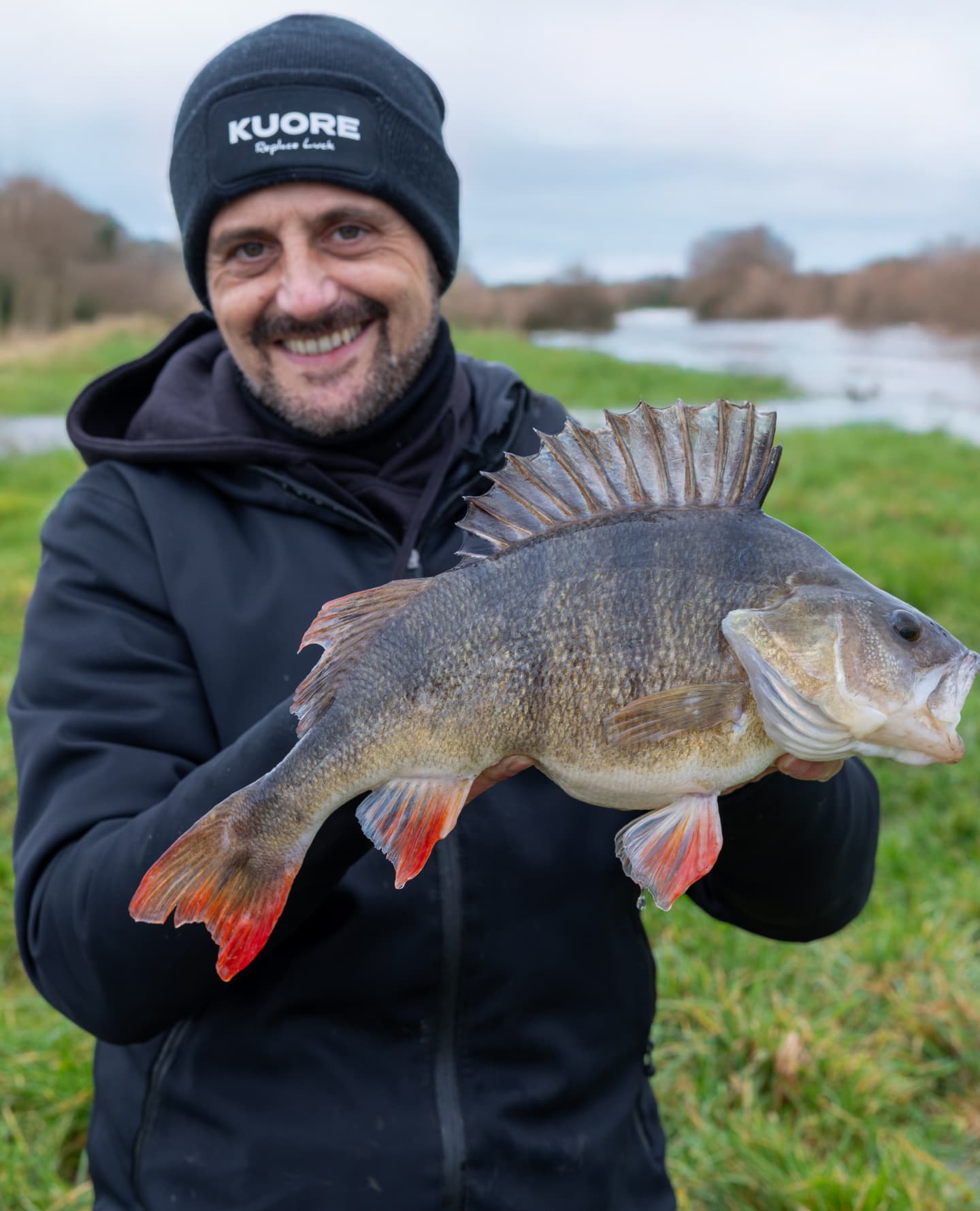
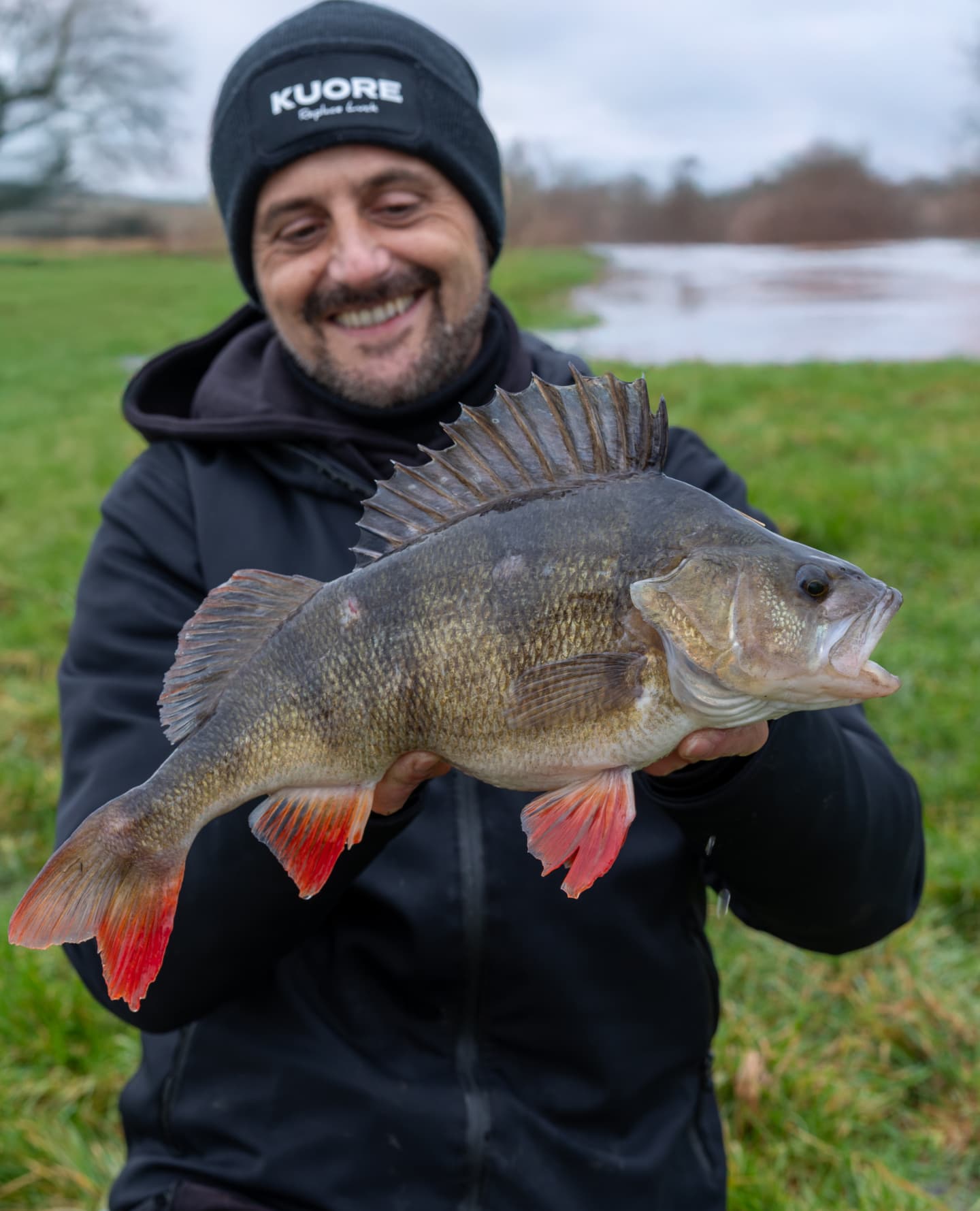
Bradley:
- 4lb 6oz
- 3lb 15oz
- 3lb 6oz
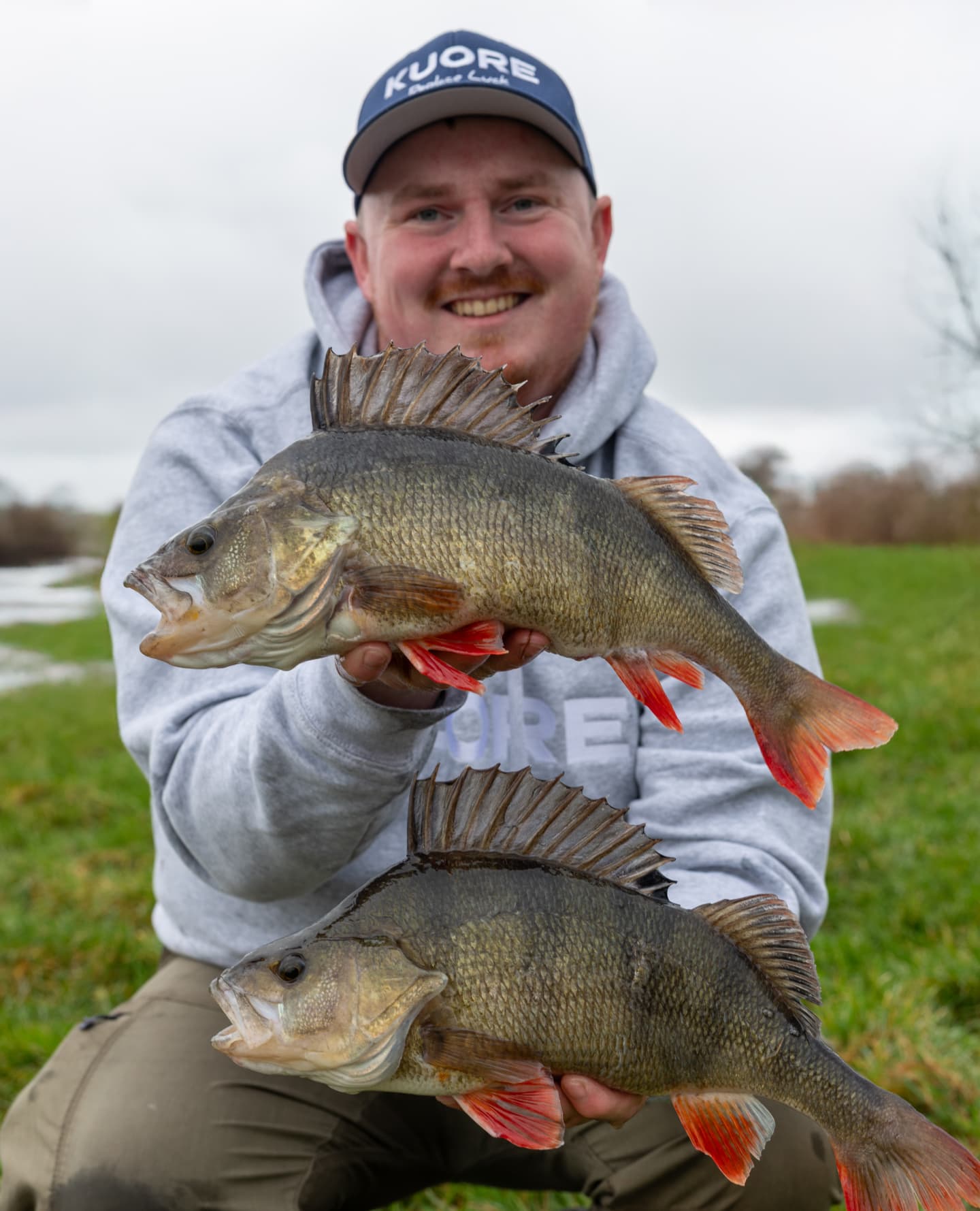
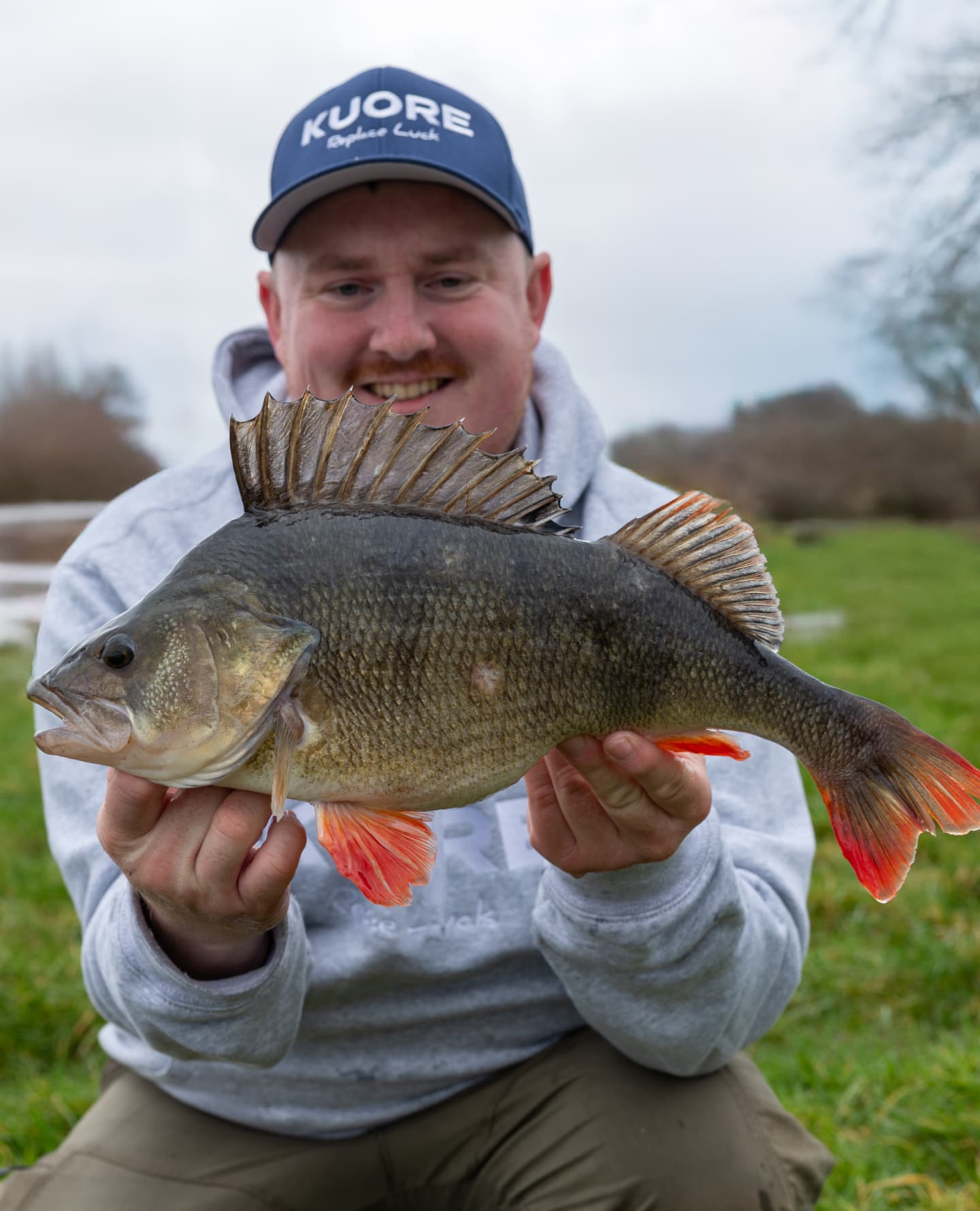
But the weekend still had more to give.
The Change That Finished It
For the final push, we both switched to another soon-to-be-released Kuore lure, this time a larger craw in the same productive colour. The effect was immediate.
On our very first casts after changing, the takes were noticeably more aggressive. Craw-style baits often trigger a violent response and while we can’t know exactly what flips that switch, experience suggests perch hit harder to stun the crayfish and avoid getting pinched.
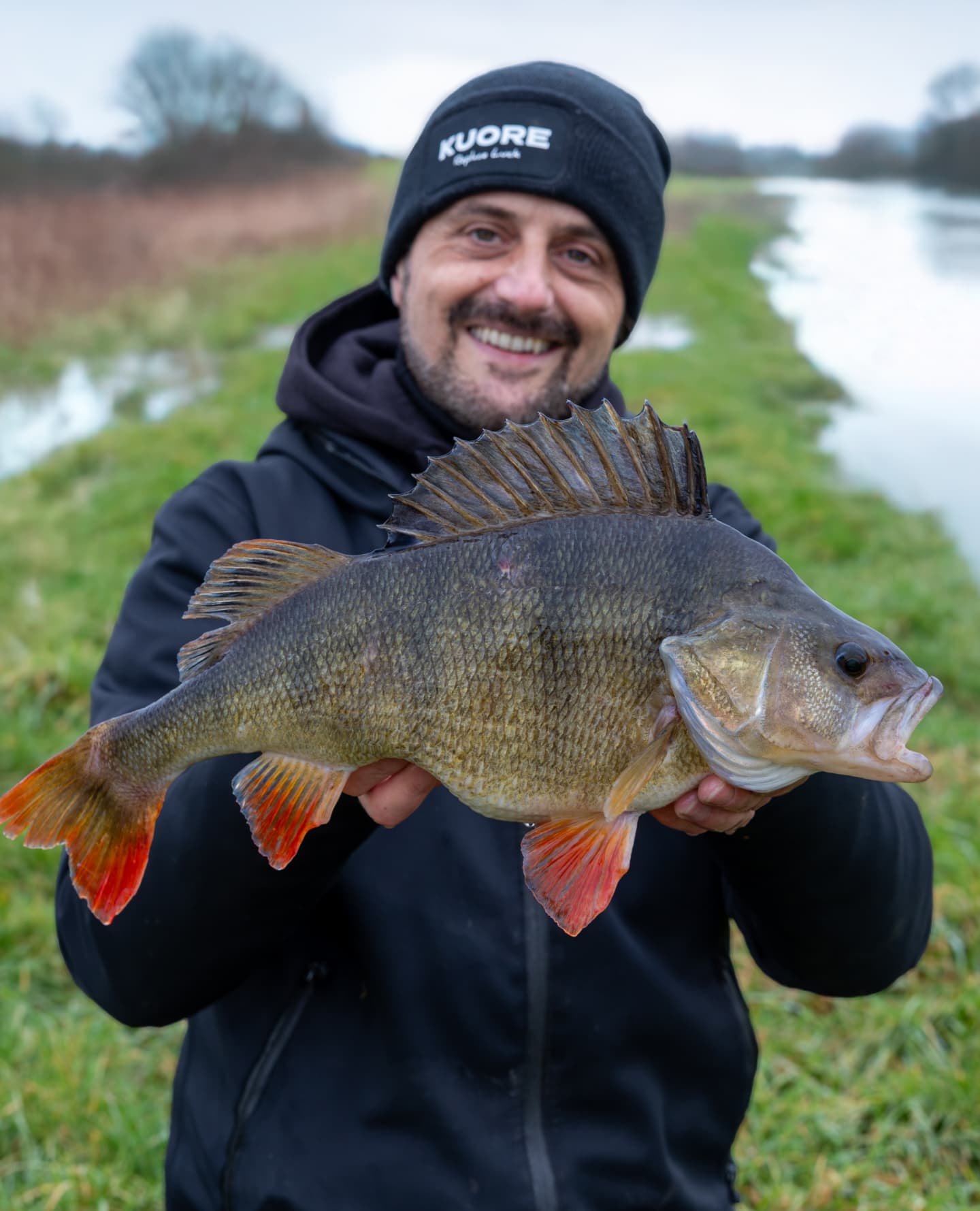
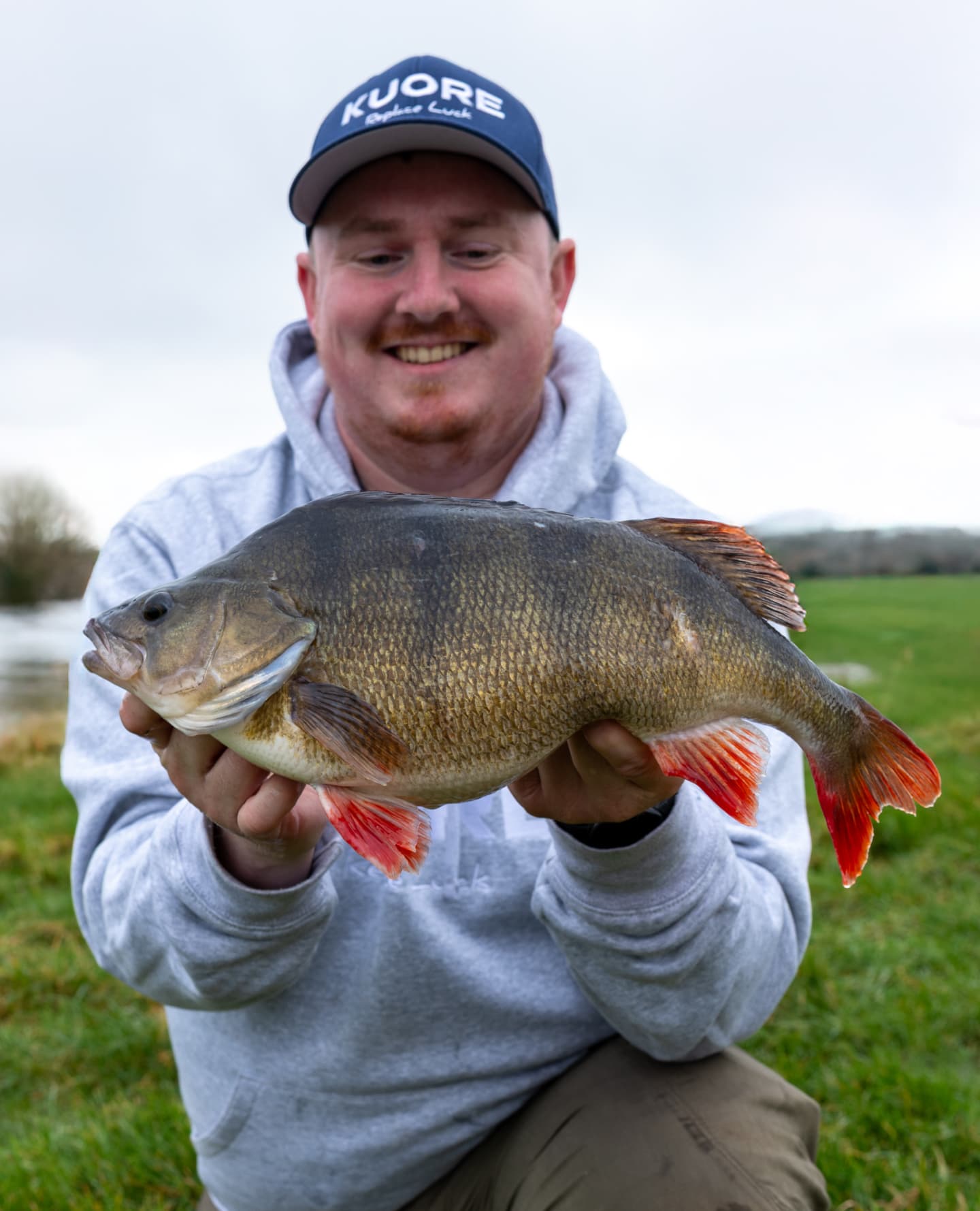
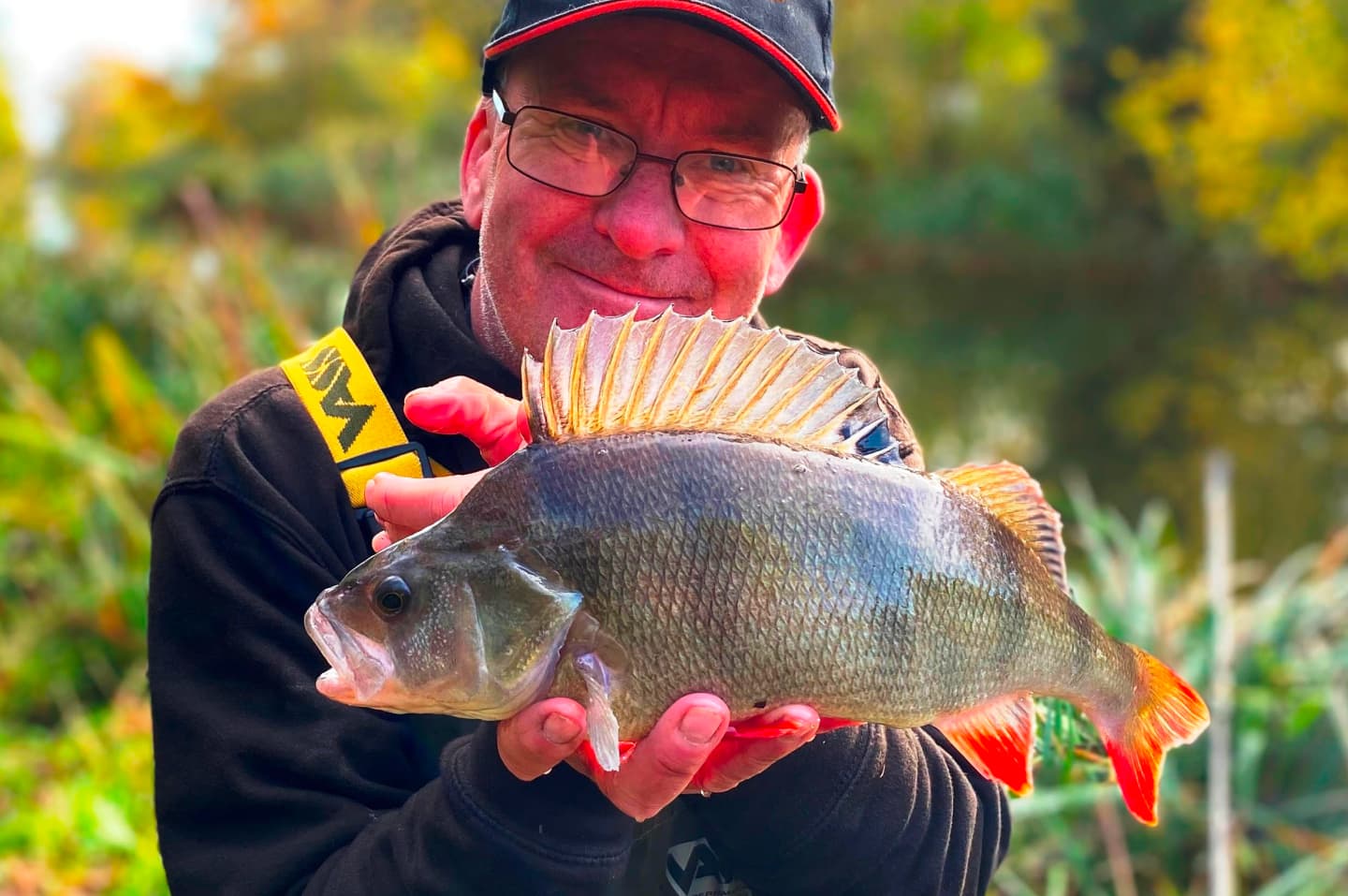
Then came the giants. Tommaso landed a 4lb 13oz goliath, shortly followed by a 4lb 14oz fish for myself. These insane perch brought the total for Sunday to 35lb 1oz for nine perch.
The Final Count
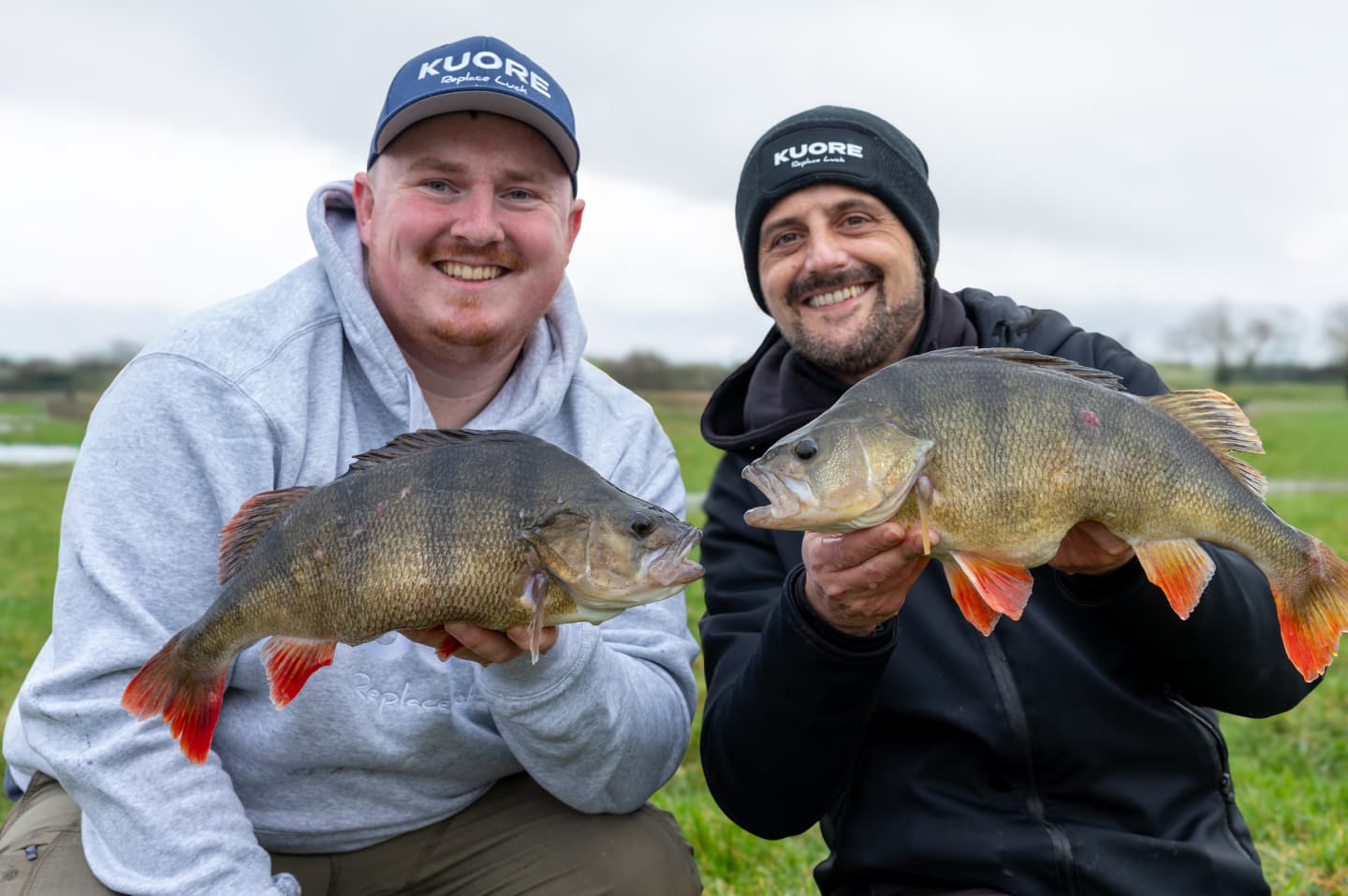
Across two unforgettable days, the numbers added up to 62lb 10oz for 16 perch.
Our Final Thought on Floodwater Perch Fishing
While many anglers sit at home complaining about flooded rivers, those conditions can create extraordinary opportunities. Get out there. Walk the banks. Find those hidden slacks. You never know what might be waiting in them.
Disclaimer: flooded rivers can be very dangerous, always inform someone of where you’ll be going or go with company.
This article was co-written by Bradley Hunt and Tommaso Martinelli