Winter Wrasse Fishing on the South West Coast

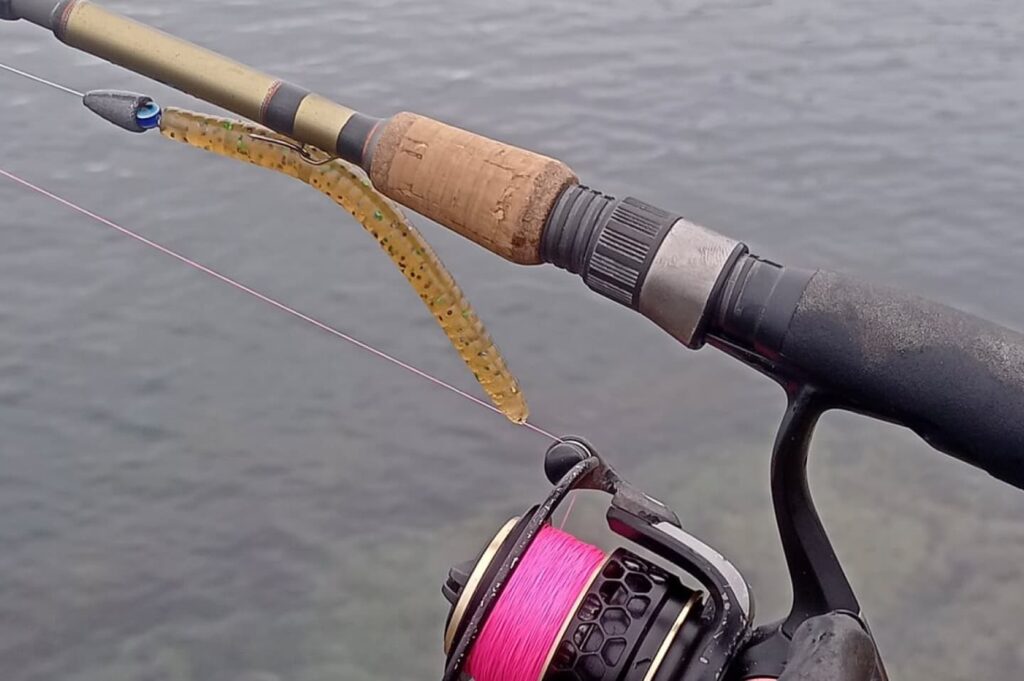
There was a clear sky, a slight north easterly breeze and a small 0.3m swell with very good water clarity, pretty good conditions for targeting wrasse during a winter wrasse fishing session. It was 8.15am and around two hours after low tide. I double checked that the hook point was nicked into the top of my senko and swung it out, underarm, into a narrow gulley that had now started to fill with the incoming tide.
This gulley was quite narrow, around three meters wide and at the time about 2 meters deep. I could see patches of sand, a few clumps of kelp and several areas that consisted of groups of rocks. I knew that this gulley would pretty much dry up on a large low tide, so it wouldn’t hold any resident wrasse, but would be very inviting for any visiting fish that were around in search of food.
Working the Lure Low and Slow
Once my lure had settled on the bottom, I gave it several really small flicks, followed by a pause to let it drop back down. It’s important to keep the flicks small as you want to ensure that the lure stays low, amongst the rocks and kelp. I let it sit for 3 or 4 seconds before giving it a few small flicks again as quite often wrasse will hit once the lure is paused.
The Strike and Fight
Just as I was about to lift out and re cast I felt the unmistakable thud from a wrasse. Sometimes you’ll get a few small taps, other times they’ll just hit hard, as was the case this time. The fish immediately tried to head down, obviously into some sort of snag that I wasn’t aware of. My clutch was tight so as not to give the fish any line so I managed to stop this run, before he tried to turn right and head out of the gulley.
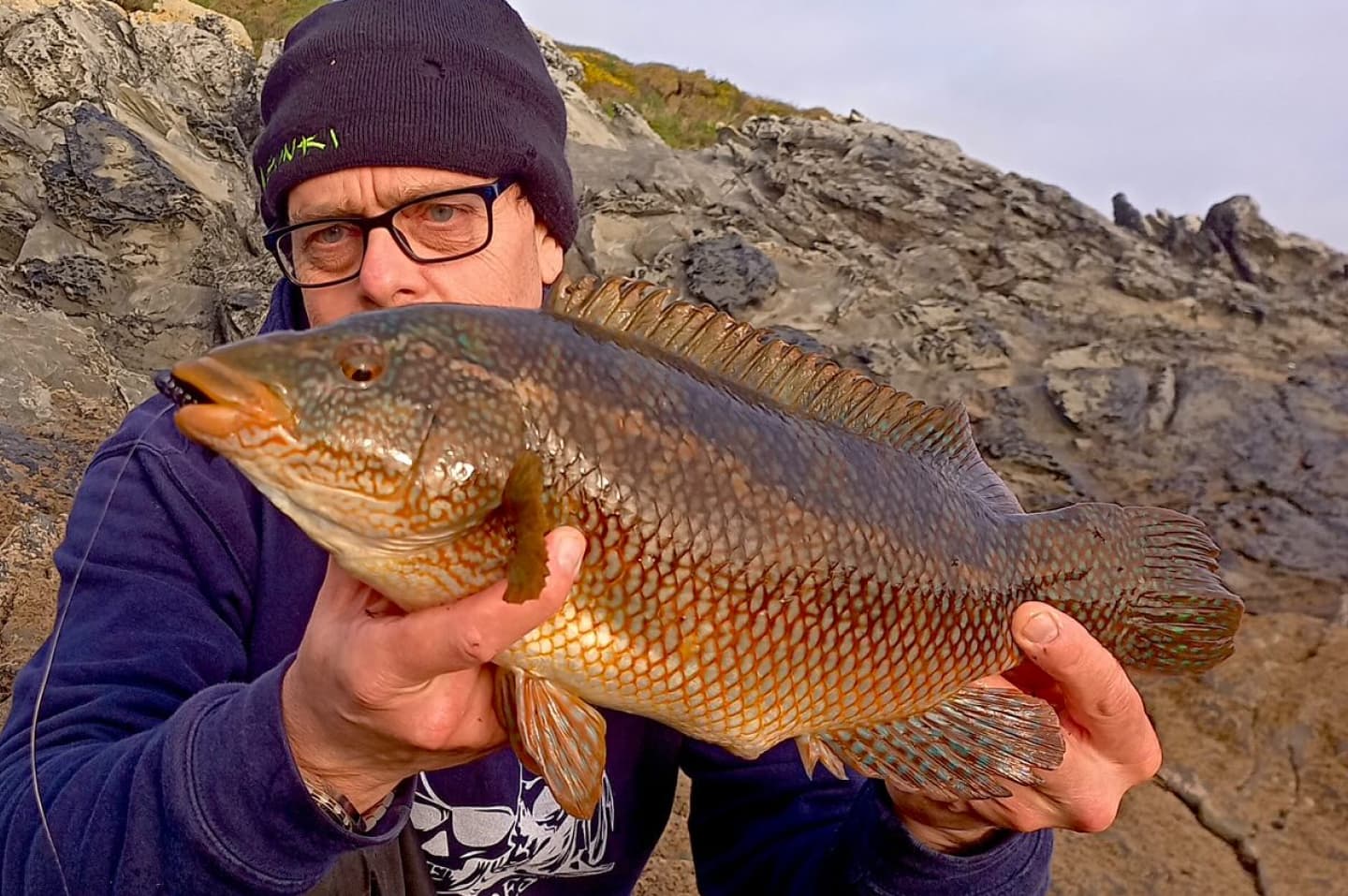
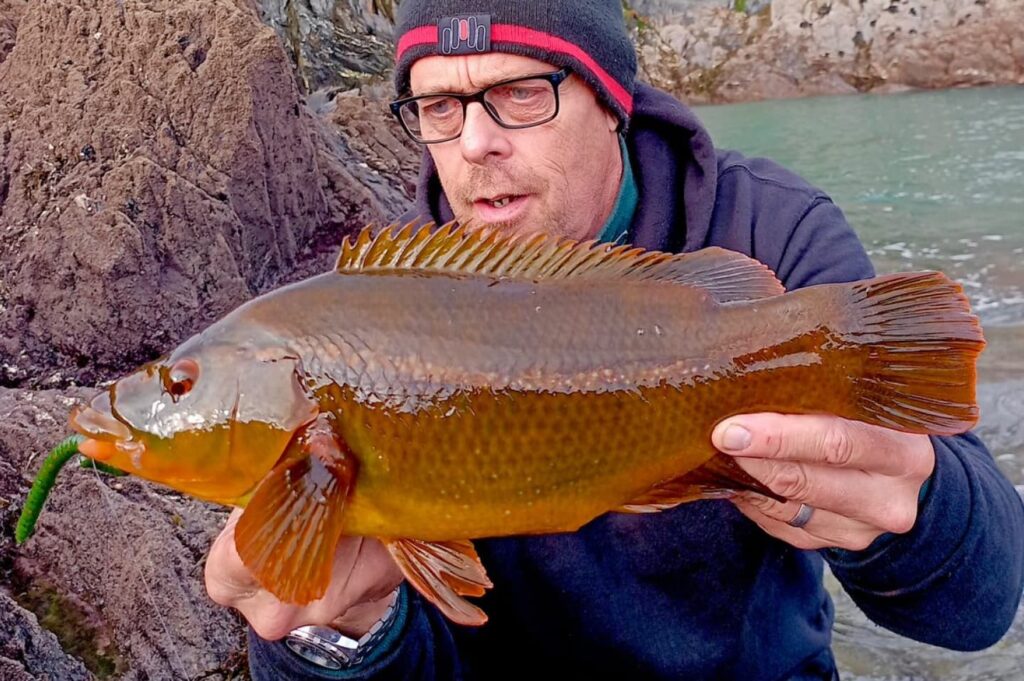
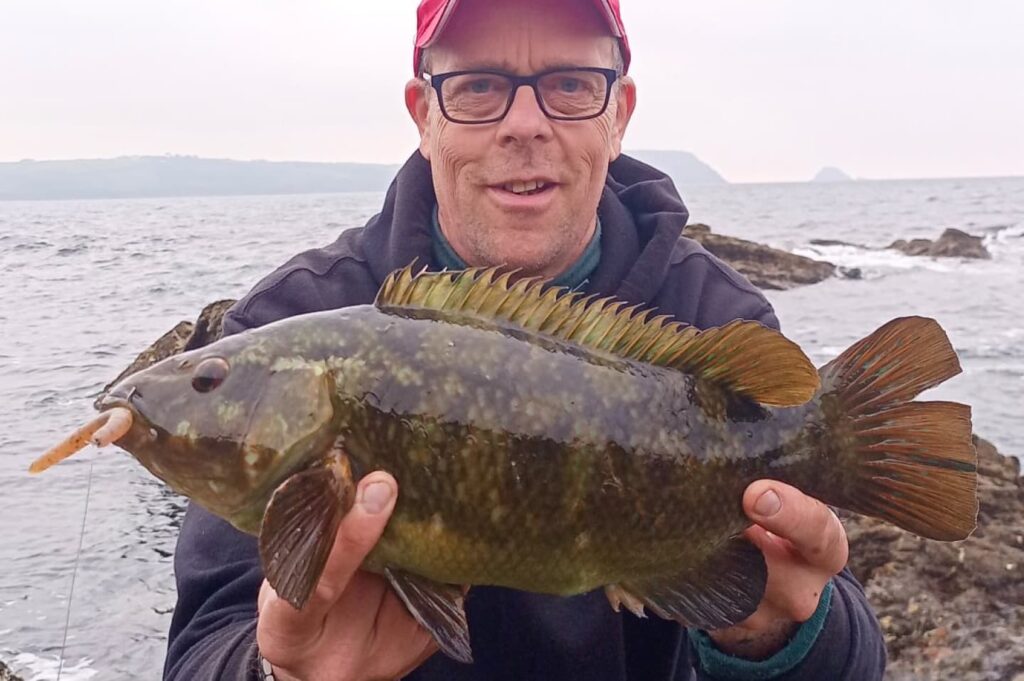
He failed. I managed to turn him and he tried to get back down again into the original snag, but he was tiring and I was gaining line. After another couple of failed attempts to evade capture, he hit the surface. I slid my net under a decent ballan, which looked to be around the 5lb mark. I quickly unhooked him and put him onto the scales. The digital readout indicated that he was 5lb 3oz. After a couple of quick photos, I held him in the water for a few seconds before he kicked off and headed back down into the depths of the gulley.
Why Winter Wrasse Fishing Works
You might be surprised to know that it wasn’t in the warm summer months that this happened, but it was in the middle of February and I was wrapped up, trying to keep warm from the chilly north easterly breeze. Although wrasse are known as a summer species, down here in the South West they are present all year around. This is why winter wrasse fishing has become increasingly popular with dedicated lure anglers. Although their numbers significantly thin out during the winter, there are always a few fish that hang around and they are generally of a decent size, making winter ballan wrasse fishing extremely rewarding.
Choosing the Right Wrasse Lures
When targeting wrasse, there’s a vast array of lures of all shapes, sizes and colours which are suitable and available to anybody who wants to target this species. Although I own many different lures, the one that I use a lot of the time and could be called my go to is the senko, also known as a stick bait or stick worm. Senko wrasse fishing has accounted for a huge number of quality South West wrasse for me over the years.
This type of lure comes in a range of lengths, generally between 75mm and 180mm and various thicknesses and colours. Size wise, I generally go for a senko that’s around 100mm long and 8mm thick, which I find through experience to be the optimal size for ballans.
Picking the Right Colours
When it comes to selecting a lure colour, my first choice is always a dark natural shade, such as black, green, brown or red. I’ll always carry a couple of bright colours too, such as orange or yellow, which I find can be beneficial if the water is murky. These bright colours also give you another option if the dark senkos aren’t producing. Believe it or not, simply swapping the lure colour can produce fish when all else fails.
Rigging for Success
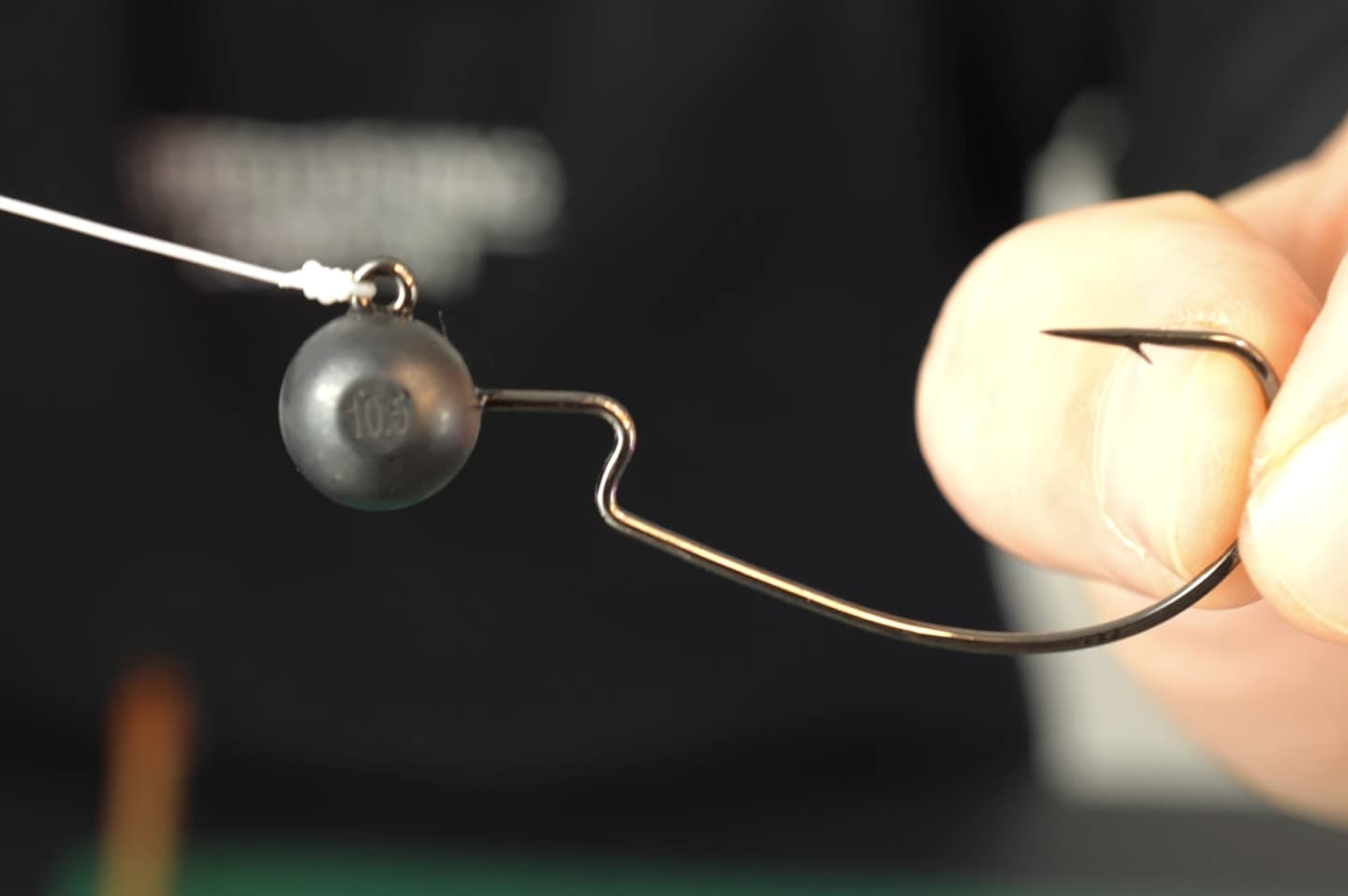
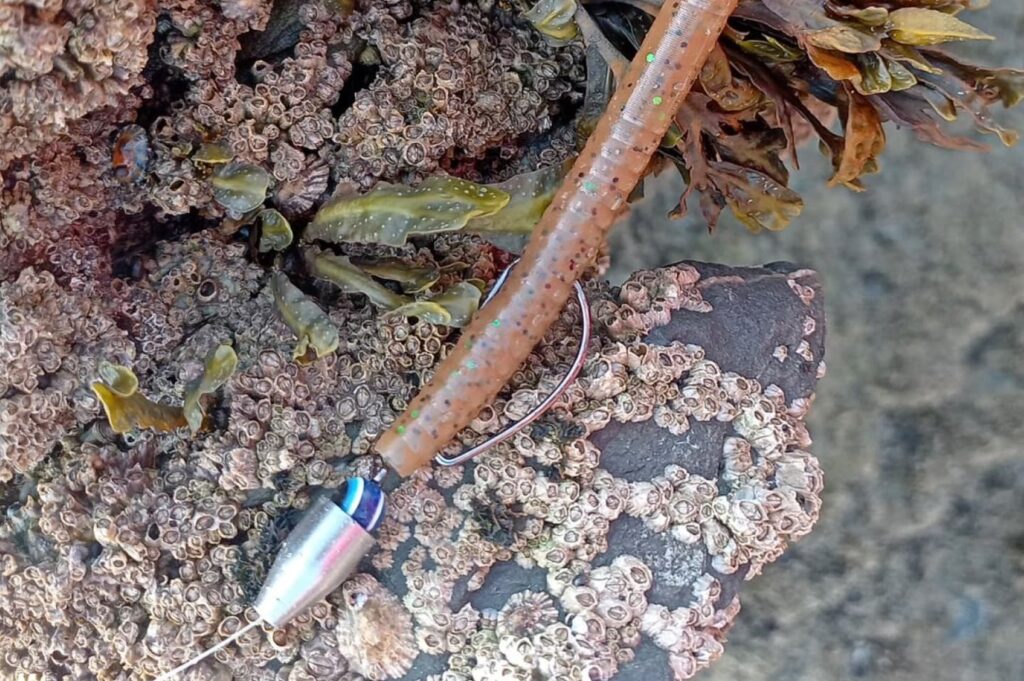
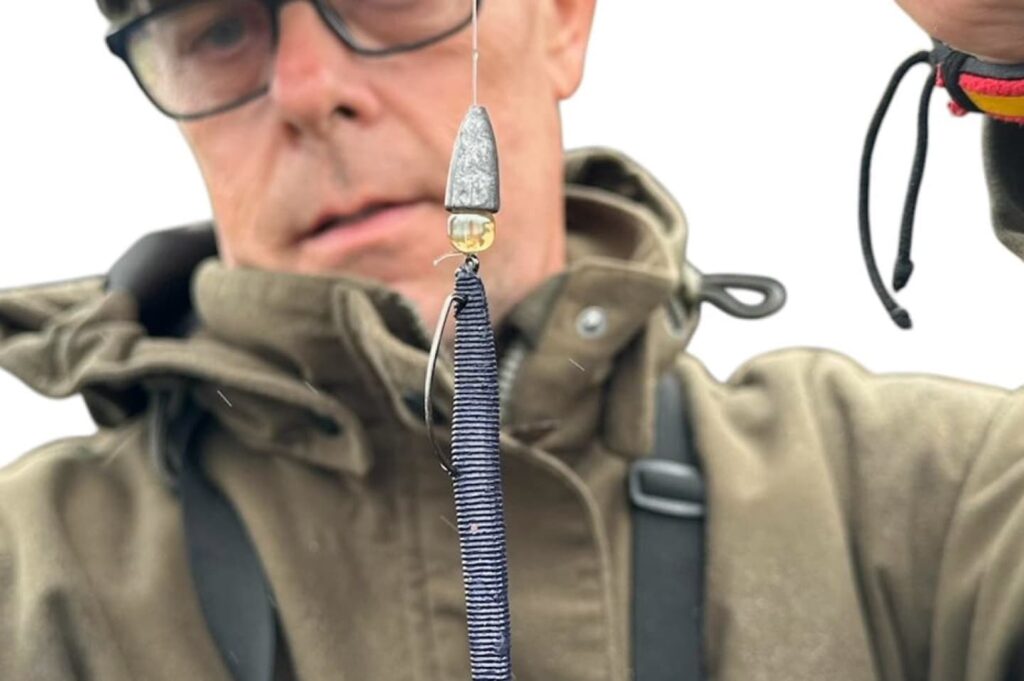
The only way to rig these lures is to go down the weedless route, as any exposed hook will be constantly snagging up amongst the rough ground. I’ll also always squash the barbs down on my hooks, I don’t see any need for barbed hooks in wrasse fishing. Even when fishing weedless, tackle losses are still inevitable, but rigging this way will keep losses down to a minimum. I personally like rigging senkos on the Texas rig, although a lot of anglers like using the cheburaska rig. I always use 20lb braid on my reels and tie on a meter of 20lb fluorocarbon as a leader using a double uni knot.
Why a Free Sliding Weight Helps
When using the Texas rig, I’ll always leave my cone weight free sliding with a glass bead inbetween the weight and the hook. This creates an audible clicking sound as the weight hits the bead against the hook, which will attract any wrasse in the vicinity that may not have seen your senko. I’ll always fish this rig with the lightest weight I can get away with, for two reasons. Firstly, the heavier the weight, the faster it will drop through kelp and in between boulders which can cause more snagging. Secondly, I like it to drop slowly through the water column, not just on the cast, but in between implementing flicks. The slower it drops, the more it will be in the strike zone of the wrasse. I’ve had many a fish strike as the lure was sinking after casting out. This slow, methodical retrieve is especially deadly in winter wrasse fishing when the fish can be more lethargic.
Retrieving the Senko Properly
The way to retrieve this type of lure couldn’t really be any more simple. On casting out, leave your bail arm open, letting the rig drop through the water column and down to the bottom on a slack line. The reason that I let it sink with the bail arm open is that if you close the bail arm immediately when the rig hits the water, everything will swing towards you while it sinks. The rig could then settle, depending on depth, several meters away from where it hit the water, thus you’re missing out on a lot of potential fishing ground. Don’t worry about registering bites when your braid is slack, you’ll still feel fish hit.
Once the rig has settled, engage your bail arm and give the lure several small flicks. I’ll flick my rod tip about 100mm each time as I want to keep the lure down near the bottom. After six or seven small flicks, I’ll let the lure drop back down on a slack line and settle back on the bottom. I’ll leave it static for three or four seconds before implementing the flicks again and working it back.
Understanding Wrasse Behaviour
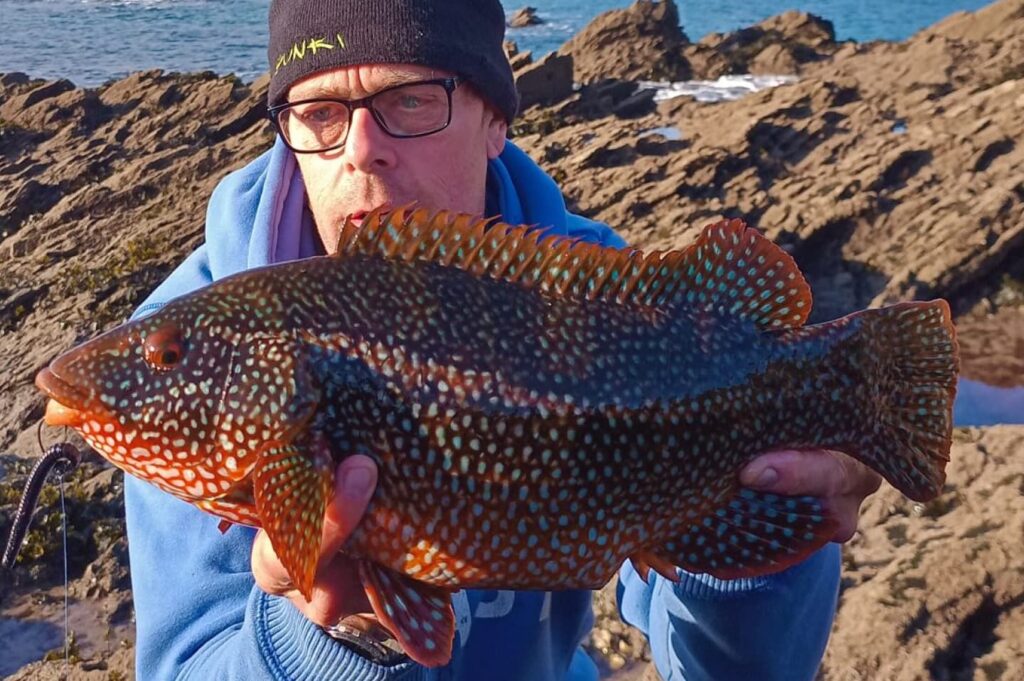
Wrasse are a territorial species. They will be present in their territory a lot of the time, but they will travel short distances to feed. For example, I caught a nicely coloured orange wrasse last May from some rough ground several yards out in around 2 meters of water. I caught the exactly same fish in September, identified by two pictures, around 100 yards further away in a flooding gulley. I’m guessing this fish had moved around to feed and would return to his territory once he’d dined.
Cover All the Water
As well as covering the ground out to sea, make sure you work lures slowly through gullies as you’ll pick up any fish that are visiting to feed. Also, make sure that you work the lures right to your feet before lifting out, as quite often wrasse will be feeding along the edges of rocks and in cracks and crevices.
When Is the Best Time to Target Wrasse?
If anybody asks me what the best time of the year to target wrasse is, I’ll give them one of two answers. If you just want to get a bend in your rod, head down through the Summer or Autumn when the fish are plentiful. If you want to catch less wrasse but bigger ones, head down between the end of October and the end of February.
Winter Numbers and Specimens
Last December, I caught nineteen fish in four short sessions, with not one wrasse weighing less than 3lb 1oz. This tally consisted of seven fish that went over 4lb and another five that went over 5lb, including one at 6lb 5oz. Sixteen of these fish came on a 100mm senko. I’ve never achieved a catch return like this through the Spring, Summer or Autumn, which again highlights the huge potential of winter wrasse fishing for specimen ballans.
Get Out This Winter
This winter, whether you live in or are visiting the South West, grab a few packets of senkos and get out with a lure rod and enjoy hitting into some hard fighting ballan wrasse. You never know, there might just be a 7lb plus specimen lurking around with your name on it.