Fishing Deadbaits in Heavy Weed: Transform Your Winter Pike Fishing

Presenting a dead bait properly in thick weed is one of the biggest headaches for pike anglers. Beds of Canadian pond weed, lilies or dying aquatic vegetation often render conventional ledger rigs ineffective. Dead baits tend to sink into the tangle below the weed, invisible, unscented, and ignored by wary predators.
After struggling with this problem on my only local lake, which is very weedy for most of the pike season, and hearing regular mentions of the sunk-float paternoster from experienced anglers such as Mick Brown and Des Taylor, I decided to document in detail two rigs that have delivered consistent results for me: the sunk-float paternoster and the drifter float. What follows is a full breakdown of how they perform in weedy reservoirs, why they work, and how you can replicate them yourself.
The Problem: Why Weed Often Kills Dead Bait Presentation
- In weedy venues, standard running-ledger or static bottom rigs regularly result in dead baits being buried under weed, masked and ignored as they are pulled into the weed by the ledger weight.
- Weed beds often create layers or curtains of vegetation several inches thick, making the “floor” unattractive for predators and hiding the scent and silhouette of your bait.
- What’s needed is separation, a way to anchor the lead on or near the bottom while suspending the bait in clear water above, beside for ideally on top of the weed.
That solution comes in the form of the sunk float paternoster and as a complement, the drifter float for covering water.
sunk float paternoster
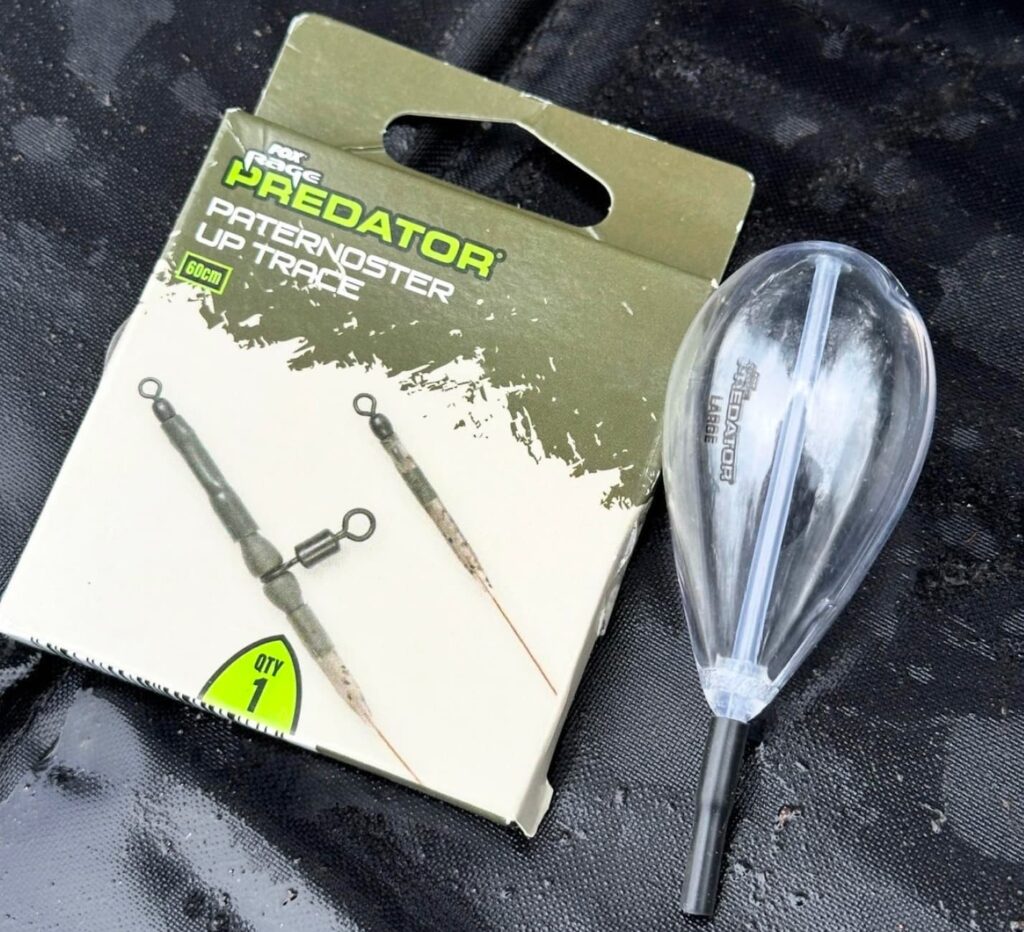
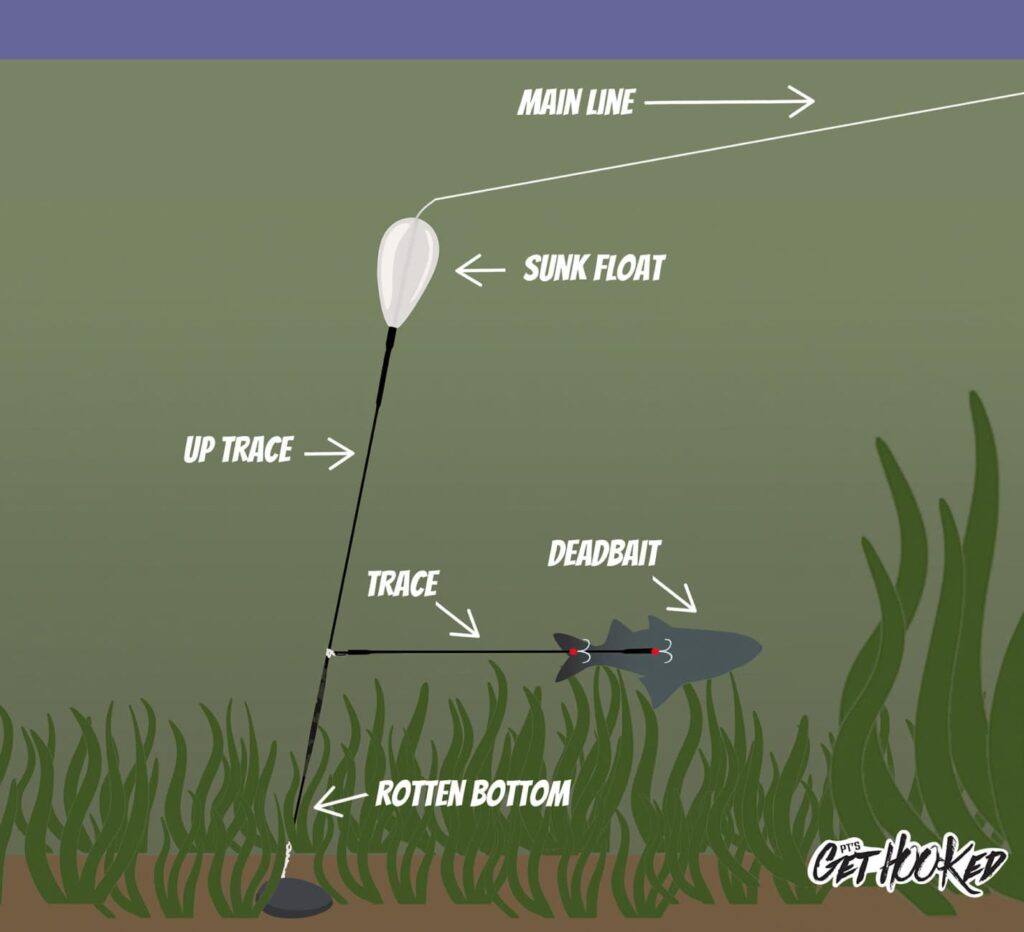
The rig is built around a 40lb coated wire up-trace, which provides a rigid backbone for attaching the float and hook trace while also preventing bite-offs by keeping the mainline safely away from the pike’s teeth. A sunk float, such as the Fox Rage Predator Paternoster float, is used to support the bait off the bottom and suspend it above weed; its silicone sleeve pushes neatly over the swivel at the top of the up-trace, creating a compact, snag-free setup that casts cleanly.
A rotten-bottom or weak-link lead attachment holds the weight on the bottom and allows it to drop through weed independently of the bait trace, ensuring the bait remains elevated even if the lead becomes snagged. An 18-inch wire trace fitted with treble hooks is essential for pike fishing, preventing bite-offs and coping with powerful hook-sets and toothy fish. Finally, the rotten-bottom lead link, made from lighter mono or fluorocarbon in the 6–8lb range, allows the lead to break away if it snags, which is crucial for safety and for preserving the rest of the rig.
Rig Diagrams & Setup
Here is a clear visual diagram showing how to rig the sunk float paternoster (using a sunk float up-trace).
Advantages of this setup:
- Bait is held above or on the weed visible, scented, accessible.
- The lead anchors below weed, out of sight, while the float lifts the trace above weed.
- Using a rotten-bottom link provides a “safety valve” if the lead snags, protecting wire traces, hooks, and the bait itself.
- Sub surface float keeps the mainline up off the bottom preventing damage and resistance on debris and weed beds on the lake bed.
Drifter Float Rig Diagram and Set Up
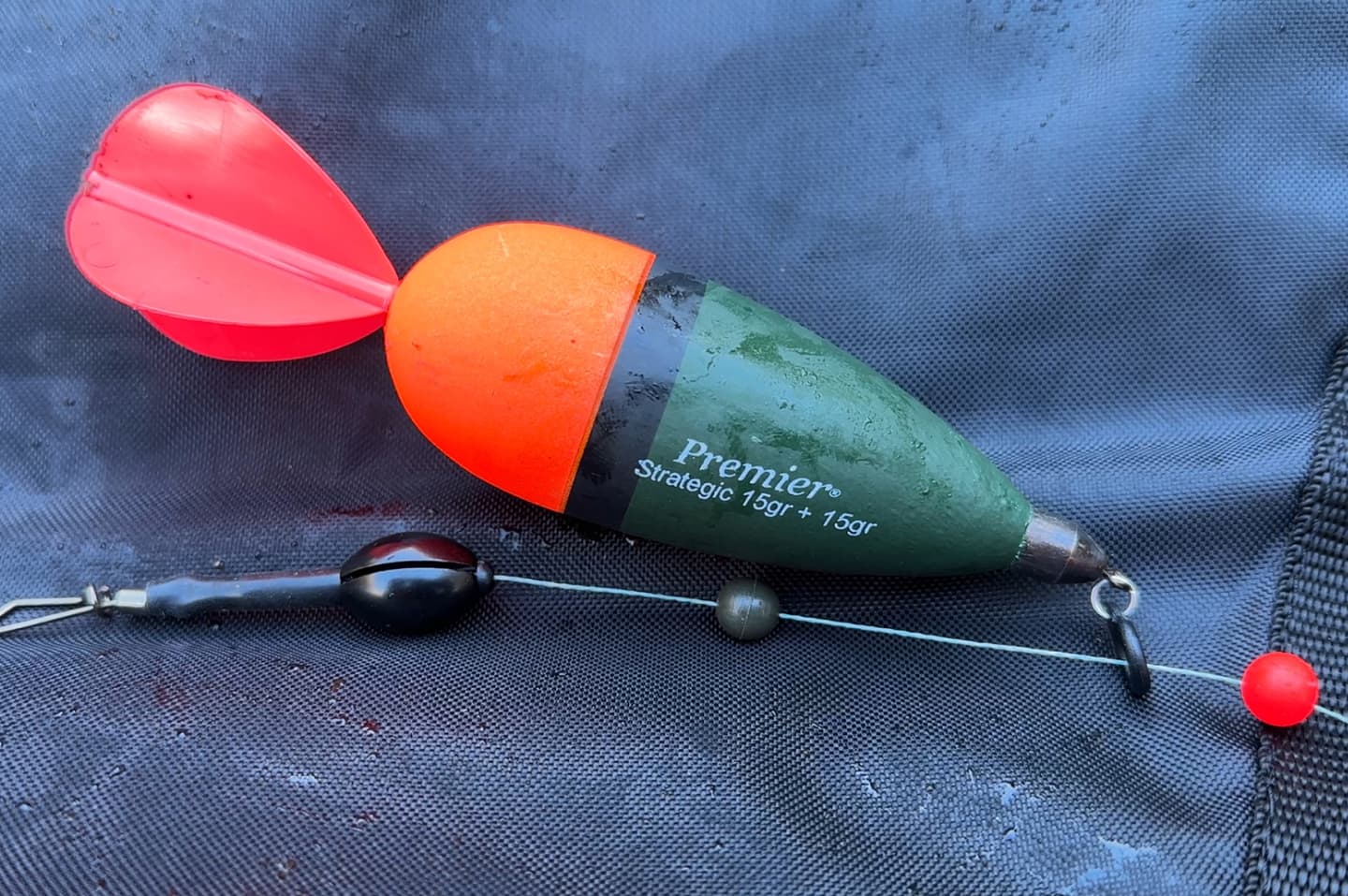
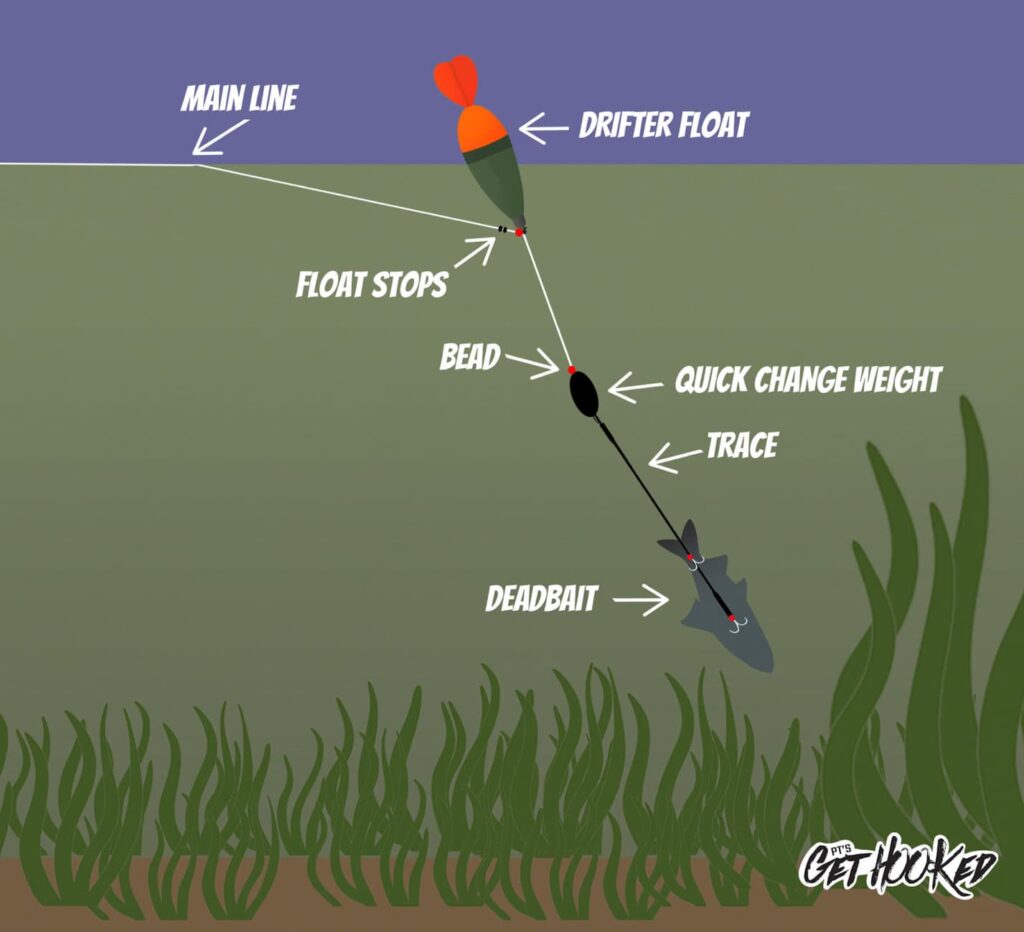
The drifter float is fixed to an up-trace, with a lead attached via a rotten-bottom, allowing the bait to be suspended around mid-water or just above the depth of weed or moorings. In a steady breeze or slight current, the float drifts naturally, carrying the bait along weed edges, troughs, or through open water between weed beds.
This keeps the hooks and trace within the water column, presenting a natural, slowly drifting deadbait that is often irresistible to pike looking for an easy meal. This approach is best used when you want to cover water rather than fish a single spot, when weed beds are extensive and the exact location of the pike is uncertain, and when wind or water movement can be used to carry the bait through likely holding areas.
Rig Diagrams & Setup
Here is a clear visual diagram showing how to rig the drifter float rig.
Best used when:
- You want to cover water rather than fish a single spot.
- The weed bed is extensive and you’re unsure exactly where pike are located.
- The wind or water movement can help carry the bait across likely pike zones.
Why These Rigs Work and Why They Matter
Sunk Float Paternoster
- Separates bait from lead, bait rises into the strike zone above weed, while lead stays hidden below.
- Avoids fouling bait in weed, improved scent plume, greater visibility, and realistic presentation.
- Effective in dense or tall weed situations, or when fishing structure margins, channels or shelves.
- Using a rotten-bottom link ensures rig safety snagged weight won’t cost you the whole setup.
Drifter Float
- Combines mobility with stealth
- a slowly drifting bait often triggers communal reactions from pike holding near weed margins.
- Great for searching unknown or under-fished areas, or for sweeping across weed edges and channels.
- Offers an alternative when static rigs fail, especially valuable when fish are roaming or widely spread.
When & How I’ve Used Them: Winter Results
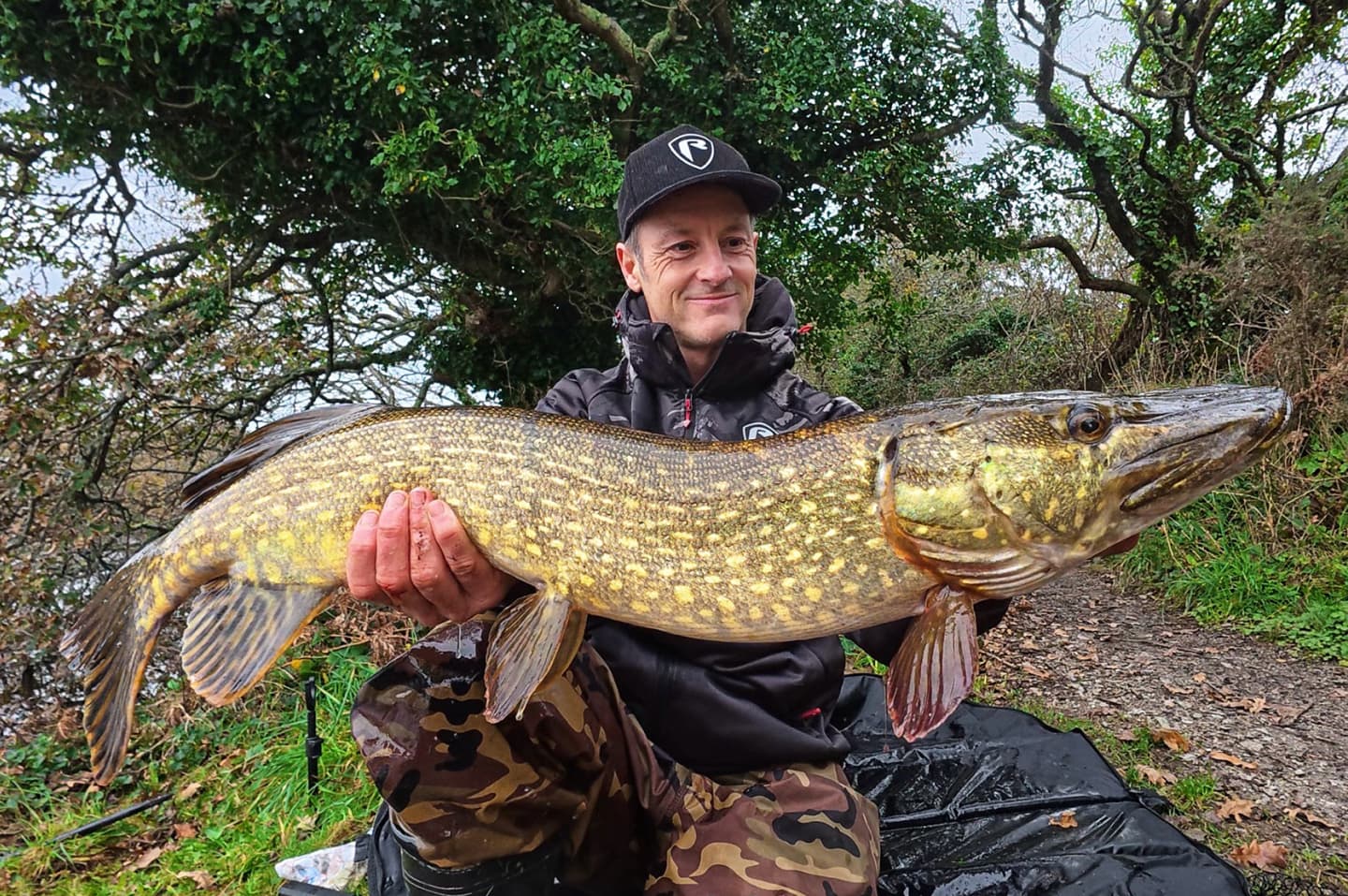
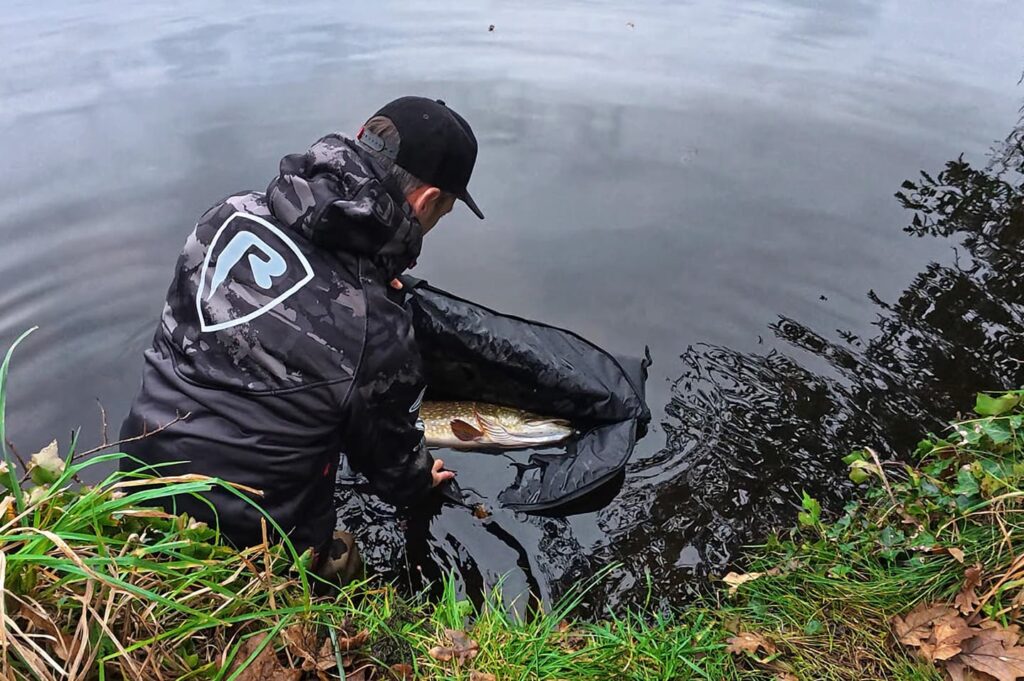
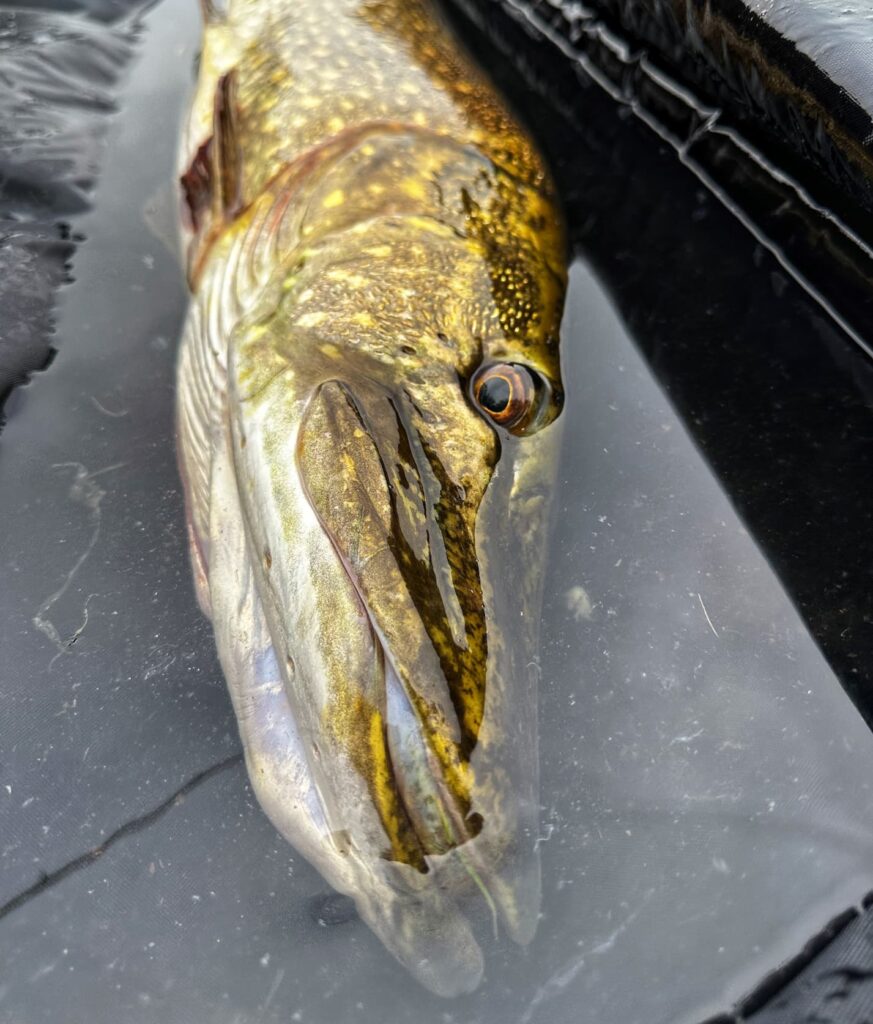
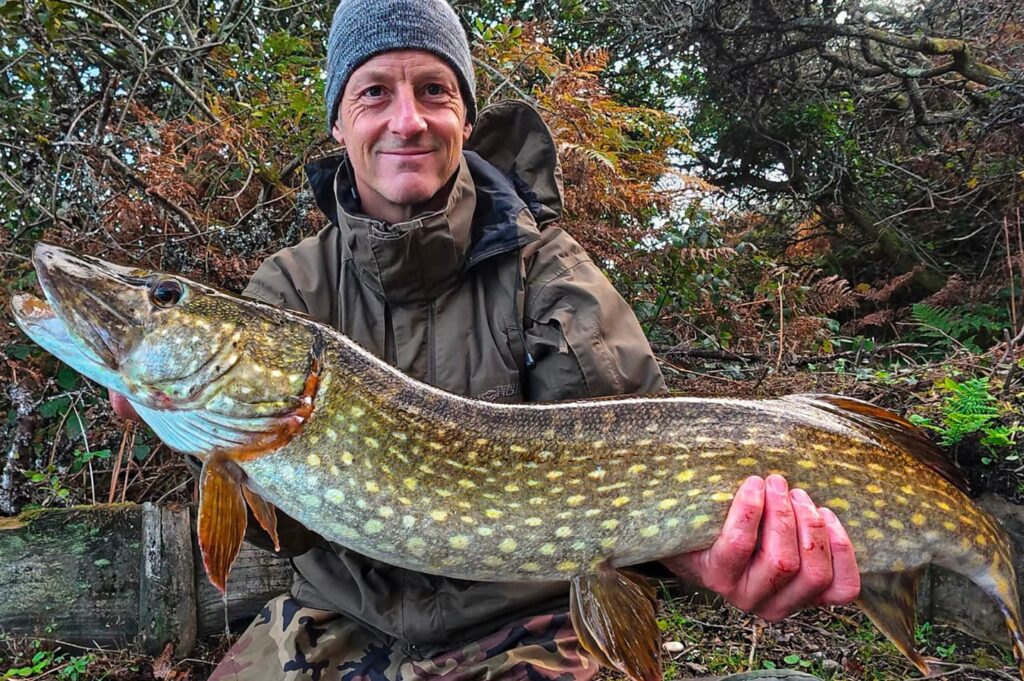
On a recent winter session late November (air frost, sub-zero overnight, cold water temperatures), both rigs produced positive results: fish took confidently, sometimes on drifting baits under the drifter setup but more takes came on the static sunk float paternosters,
I found that even when weed was dense, presenting a bait just above or on the weed, rather than buried in it – made all the difference. The baits remained visible, as scent dispersed more freely, and pike were willing to commit.
It’s also worth noting that using a lighter rotten-bottom lead line (e.g. 6-8 lb fluorocarbon) with a minimalist weight reduces detectability and improves rig safety.
Which Rig for Which Situation
| Situation / Condition | Recommended Rig |
|---|---|
| Dense, tall weed; fishing a specific mark / shelf / margin | Sunk Float Paternoster Rig |
| Covering new ground, weed edges, bays or channels; wind or slight current present | Drifter Float Rig |
| Static bait required; clear, flat water over weedbeds | Sunk Float Paternoster Rig |
| Searching shallow margins or variable depth zones | Drifter Float Rig |
Final Thoughts
If you’ve ever returned to the bank with fouled or ignored deadbaits covered in weed after fishing a weedy swim, the sunk float paternoster and drifter float rigs offer two of the most effective, practical solutions available.
- The sunk float paternoster excels when you need precise presentation in heavy weed.
- The drifter float comes into its own when you want to cover water and search for roaming pike.
Using gear such as the Fox Rage Predator sunk float up-trace and matching floats, with an appropriately chosen rotten-bottom lead link, makes the setup straightforward, safe and suited to modern predator fishing tackle.
If you fish weedy lakes or reservoirs, these rigs are worth adding to your toolkit. Adjust a few details (rotten bottom length, lead size, float choice, bait size) to suit the venue, and you’ll increase your chances of getting your deadbait visible and getting results.